

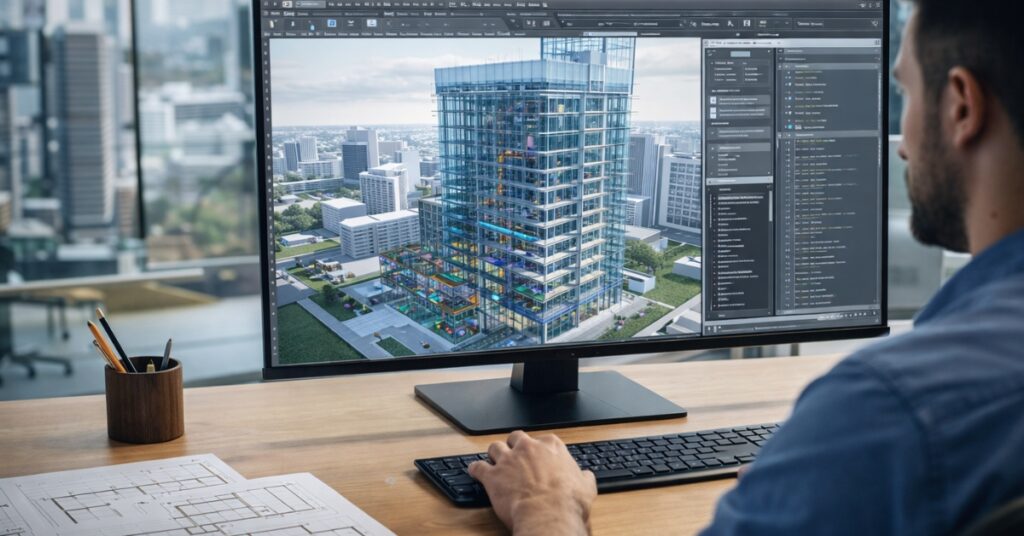
Architecture has always evolved.But now it’s evolving faster than the buildings can be built. We are living in a digital-first world where people shop online, learn online, and even socialize online. Naturally, architecture is being pulled into the same transformation. The shift is not just about software. It’s about how we think, design, present, and build. After 15 years in the industry, I can confidently say this: digital life is not changing architecture’s purpose — it’s changing architecture’s process. The Real Reason Architecture is Changing Let’s start with the obvious truth: people’s expectations have changed. Clients no longer want to “trust the drawing.” They want to see it, walk through it, and feel it before construction begins. They want faster decisions, fewer surprises, and better outcomes. And in a market where budgets are tight and timelines are tighter, architects are being forced to become more precise. This is where digital architecture steps in — not as a luxury, but as a necessity. Digital transformation in architecture is essentially a response to modern complexity. From 2D Drawings to Digital Buildings A few years ago, the industry was dominated by 2D plans, elevations, and sections. Today, we are designing buildings as digital prototypes before they exist physically. That shift is massive. Instead of just drawing a wall, we define a wall as a system: thickness materials thermal behavior cost implications construction sequence This is why BIM in architecture has become such a powerful tool. BIM is not just “3D”. It’s information-rich design. …
Architecture has always evolved.
But now it’s evolving faster than the buildings can be built.
We are living in a digital-first world where people shop online, learn online, and even socialize online. Naturally, architecture is being pulled into the same transformation. The shift is not just about software. It’s about how we think, design, present, and build.
After 15 years in the industry, I can confidently say this: digital life is not changing architecture’s purpose — it’s changing architecture’s process.
The Real Reason Architecture is Changing
Let’s start with the obvious truth: people’s expectations have changed.
Clients no longer want to “trust the drawing.” They want to see it, walk through it, and feel it before construction begins. They want faster decisions, fewer surprises, and better outcomes. And in a market where budgets are tight and timelines are tighter, architects are being forced to become more precise.
This is where digital architecture steps in — not as a luxury, but as a necessity.
Digital transformation in architecture is essentially a response to modern complexity.
From 2D Drawings to Digital Buildings
A few years ago, the industry was dominated by 2D plans, elevations, and sections. Today, we are designing buildings as digital prototypes before they exist physically. That shift is massive.
Instead of just drawing a wall, we define a wall as a system:
-
- thickness
-
- materials
-
- thermal behavior
-
- cost implications
-
- construction sequence
This is why BIM in architecture has become such a powerful tool. BIM is not just “3D”. It’s information-rich design.
And information is what makes digital architecture truly intelligent.
BIM is Changing rchitecture More Than People Admit
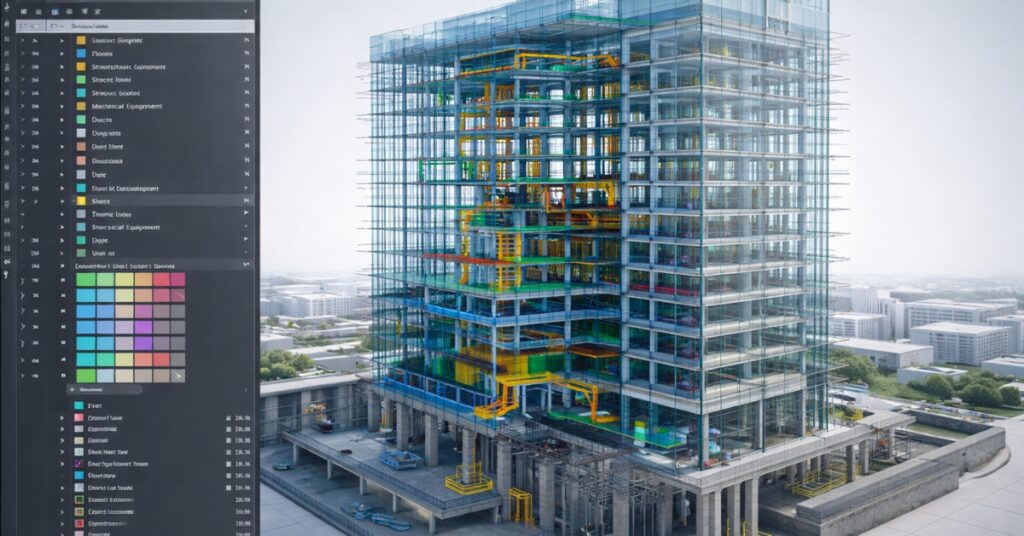
BIM (Building Information Modeling) has quietly become one of the biggest revolutions in architecture. It improves coordination, reduces errors, and helps architects design with more responsibility.
In traditional workflows, clashes between structure, electrical, plumbing, and interiors were often discovered on-site. That’s expensive, messy, and stressful. With BIM, these clashes can be detected earlier, before they become real-world disasters.
For clients, BIM means fewer surprises.
For architects, it means fewer compromises.
In digital life, architecture is becoming less about fixing mistakes and more about designing intelligently from the start.
If you want a technical definition of BIM and why the industry uses it, Autodesk explains it clearly here.
AI in Architecture: Tool, Not Replacement
AI is the most misunderstood topic in architecture right now.
Some people think AI will replace architects. That’s not realistic. Architecture is not only about generating forms — it’s about responsibility, context, and human behavior. AI cannot understand a family’s lifestyle, local culture, or the emotional feel of a space in the same way a trained architect can.
But AI in architecture is absolutely changing how we work.
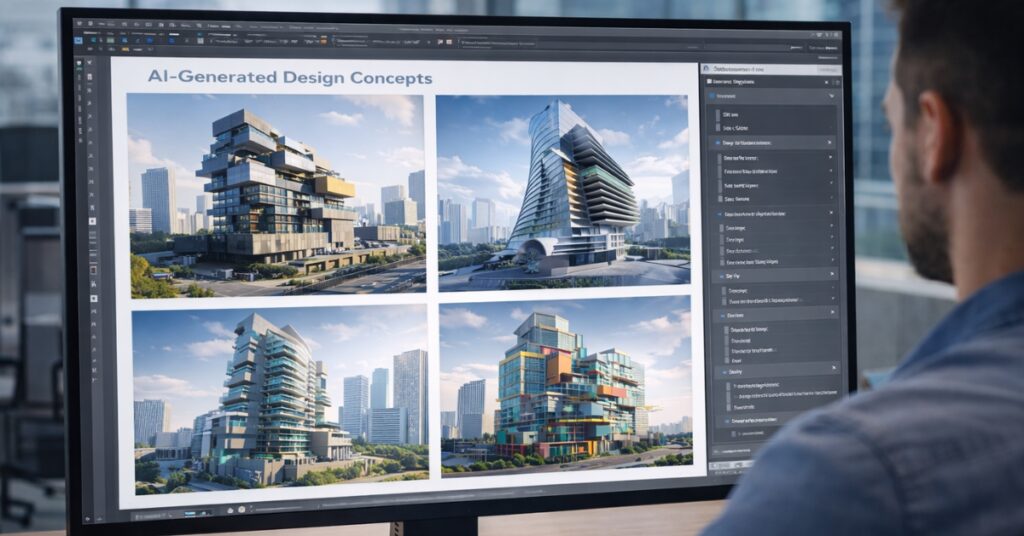
AI can help with:
-
- faster concept iterations
-
- design options generation
-
- layout studies
-
- sunlight and shadow analysis
-
- early-stage massing
The real benefit is speed. AI gives architects more time to focus on what matters: spatial quality and design logic.
Parametric Design and Computational Thinking
One of the most exciting shifts in digital architecture is parametric design.
Parametric design is not about making weird shapes. It’s about designing using rules and relationships. You define parameters — like sunlight, airflow, privacy, or structure — and the design evolves based on those inputs.
This is why computational design is so powerful. It helps architects create buildings that respond to performance, not just aesthetics.
In short, architecture is becoming more data-aware.
And in 2026, data-aware design is not optional.
AR/VR is Changing How Clients Approve Design
This is a big one — especially for residential clients.
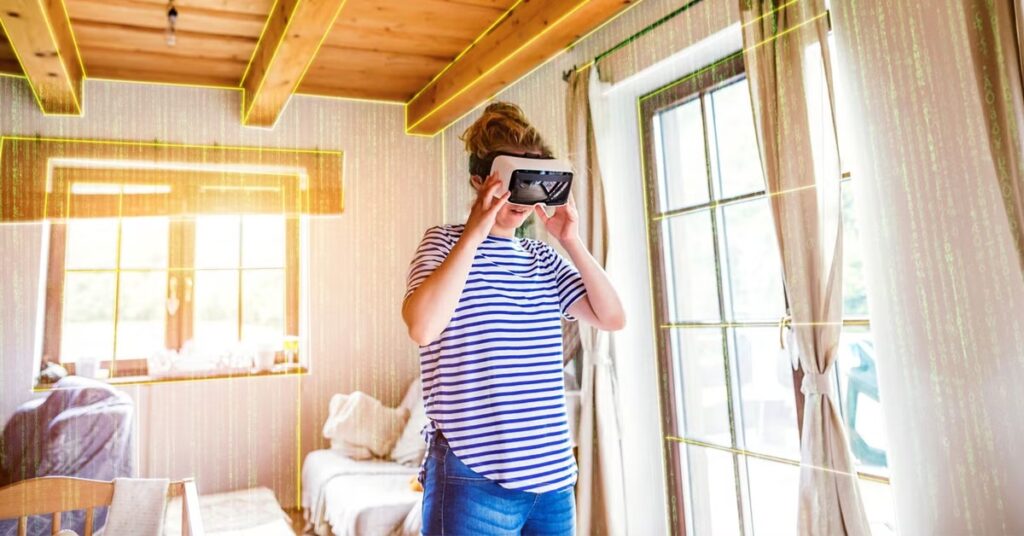
Earlier, clients had to imagine a space from drawings. Today, they can experience it using VR walkthroughs or AR overlays. This reduces misunderstandings and increases confidence.
AR/VR in architecture helps clients:
-
- understand scale
-
- feel ceiling heights
-
- see material mood
-
- evaluate furniture placement
-
- spot planning issues early
As a result, architecture is becoming more collaborative.
And honestly, that’s a good thing.
Architecture in Digital Life is Becoming More Human (Not Less)
Here’s the twist: the more digital architecture becomes, the more human it needs to feel.
Why?
Because digital life is exhausting. People are spending more hours in front of screens than ever before. So when they come home, they don’t want a “cool” house. They want a calm house. They want a space that reduces stress.
This is why modern architecture trends are shifting toward:
-
- warm minimalism
-
- natural materials
-
- softer lighting
-
- biophilic design
-
- better ventilation
Digital tools may be shaping the design process, but the final output is still deeply emotional.
Architecture is not becoming robotic.
It is becoming more intentional.
Smart Buildings and the Rise of Responsive Architecture
Digital life has also introduced the concept of smart building design.
Smart architecture is not only about automation. It’s about responsiveness.
A smart building can adjust:
-
- lighting based on daylight
-
- cooling based on occupancy
-
- security based on zones
-
- energy usage based on time-of-day
This is especially relevant in commercial architecture, but it’s now entering residential design too.
The challenge is balance.
A smart home should not feel like a gadget showroom. It should feel like architecture — quiet, seamless, and supportive.
The New Architect Skillset in 2026
In the digital age, architects are expected to be more than designers.
They are expected to be:
-
- planners
-
- visual storytellers
-
- coordinators
-
- system thinkers
-
- tech-aware professionals
This doesn’t mean every architect needs to be a software expert. But it does mean every architect must understand how digital tools affect decision-making.
The future of architecture belongs to architects who can combine:
-
- design sensitivity
-
- technical clarity
-
- and digital confidence
The Biggest Problem With Digital Architecture (The Honest Truth)
Now let’s talk about what nobody says openly.
Digital tools can also make architecture shallow.
When design becomes too fast, it can lose depth. When visuals become too polished, the architecture can become performance-driven instead of comfort-driven. Some architects start designing for renders, not for real life.
That’s dangerous.
Because the real test of architecture is not a 3D image.
It’s how the building feels after 5 years.
Digital life is pushing architecture to move faster. But good architecture still requires slow thinking.
Where Architecture is Headed Next
Architecture technology trends suggest one clear direction: the industry is moving toward integration.
Design, construction, cost, sustainability, and performance are slowly becoming part of one connected workflow.
The next phase will include:
-
- real-time energy simulation
-
- carbon footprint tracking
-
- digital twins of buildings
-
- AI-assisted building compliance
-
- more prefabrication + modular construction
This will make architecture more efficient.
But the architect’s job remains the same:
to create spaces that improve life.
Conclusion: Digital Tools Are Changing Architecture — But People Still Matter
Architecture is evolving in digital life because life itself has changed.
Clients are smarter. Projects are more complex. Timelines are shorter. And climate demands better performance. Digital architecture, BIM, AI, parametric design, and AR/VR are not “future” anymore — they are today’s working reality.
But the soul of architecture remains human.
Technology can speed up design.
But only architects can give it meaning.
And in a world that is increasingly digital, the best architecture will be the one that feels most real.
If you enjoy architecture explained with clarity, logic, and real-world design thinking, explore more articles on SMART.POV where we decode planning, materials, and future-facing trends through an architect’s lens.