

What if your home had a runway instead of a driveway? The extraordinary John Travolta house in Florida isn’t simply another celebrity mansion — it’s a bold architectural statement where lifestyle, aviation, and spatial planning intersect in the most extraordinary way imaginable. Set within an elite aviation community, this John Travolta mansion redefines what we understand as luxury residential design. It is not built merely for living — it is built around movement, precision, and passion. As an architect, I find the planning logic behind this estate fascinating. The integration of a private runway, airplane hangar, and residential core is not accidental. It is intentional design thinking at its highest level. This is not just a luxury home. This is an extraordinary aviation estate where architecture quite literally takes flight. And once you understand the spatial choreography behind the John Travolta house, you’ll begin to see celebrity homes very differently. Location & Vision: Where Passion Shapes Architecture Before we analyse the design, we must understand the man behind it. John Travolta is not just a Hollywood icon known for films like Pulp Fiction and Grease. He is a licensed pilot with a deep, lifelong passion for aviation. And that passion is precisely what makes the extraordinary John Travolta house so architecturally unique. Unlike most celebrity luxury homes in Florida, this estate was not selected for glamour alone. It was chosen for alignment with lifestyle. The property sits inside the highly exclusive Jumbolair Aviation Estates — one of the only residential …
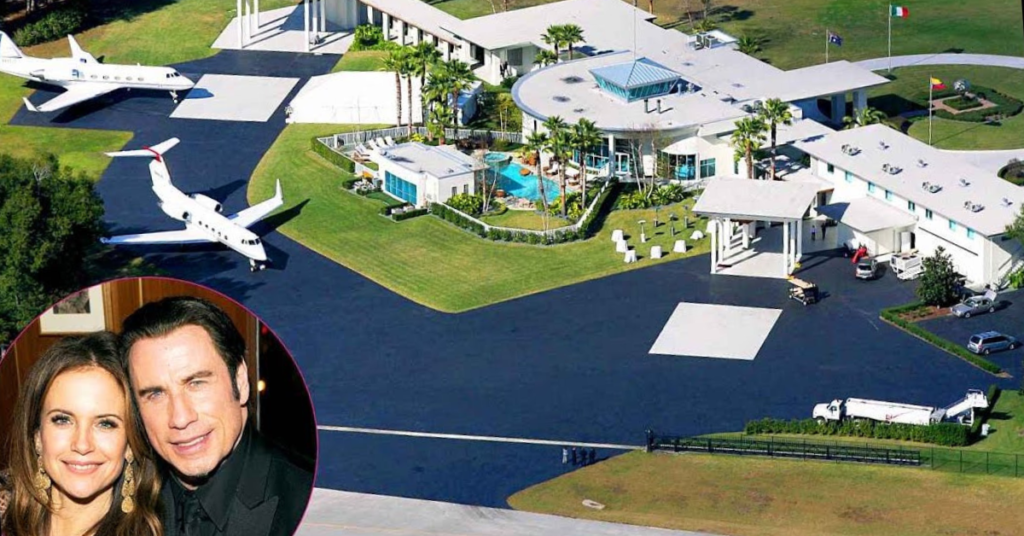
What if your home had a runway instead of a driveway?
The extraordinary John Travolta house in Florida isn’t simply another celebrity mansion — it’s a bold architectural statement where lifestyle, aviation, and spatial planning intersect in the most extraordinary way imaginable.
Set within an elite aviation community, this John Travolta mansion redefines what we understand as luxury residential design. It is not built merely for living — it is built around movement, precision, and passion. As an architect, I find the planning logic behind this estate fascinating. The integration of a private runway, airplane hangar, and residential core is not accidental. It is intentional design thinking at its highest level.
This is not just a luxury home. This is an extraordinary aviation estate where architecture quite literally takes flight. And once you understand the spatial choreography behind the John Travolta house, you’ll begin to see celebrity homes very differently.
Location & Vision: Where Passion Shapes Architecture
Before we analyse the design, we must understand the man behind it.
John Travolta is not just a Hollywood icon known for films like Pulp Fiction and Grease. He is a licensed pilot with a deep, lifelong passion for aviation. And that passion is precisely what makes the extraordinary John Travolta house so architecturally unique.
Unlike most celebrity luxury homes in Florida, this estate was not selected for glamour alone. It was chosen for alignment with lifestyle. The property sits inside the highly exclusive Jumbolair Aviation Estates — one of the only residential airparks in the United States designed specifically for private aircraft owners.
Now pause and think about that.
This isn’t a mansion with a garage. This is a mansion with direct runway access. From a planning perspective, that changes everything.
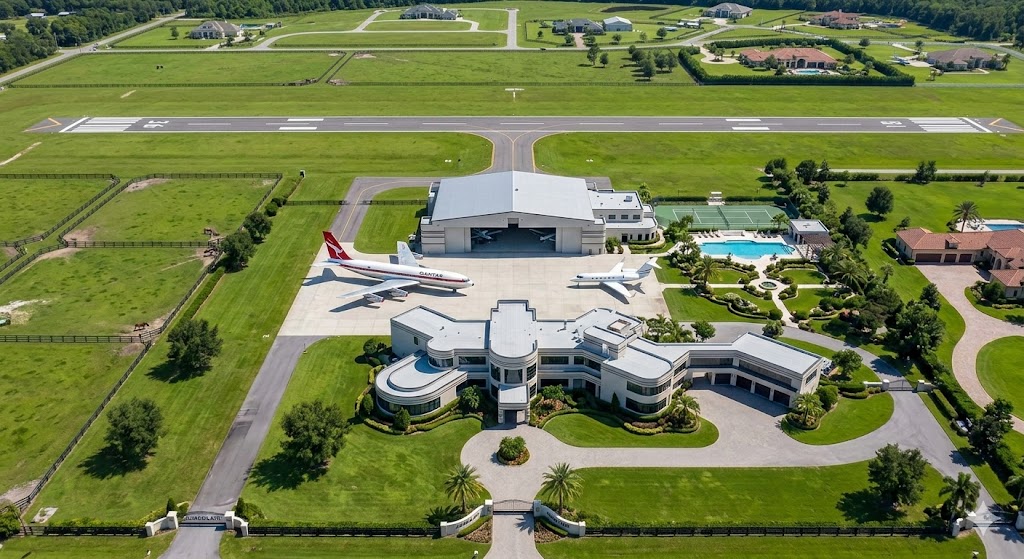
The John Travolta Florida home is positioned along a 7,500-foot private runway, allowing aircraft to taxi directly to the residence. The spatial zoning of the estate had to respect aviation safety clearances, noise corridors, and maneuvering geometry.
As an architect, I find this extraordinary because the house is not imposed onto the site — it evolves from it. The hangar is not an accessory structure. It is part of the architectural identity.
The driveway doesn’t dominate arrival. The runway does. And this is where the brilliance lies — the estate is designed around movement. Aircraft movement. Human movement. Spatial movement. Most celebrity homes showcase wealth. The extraordinary John Travolta mansion showcases purpose.
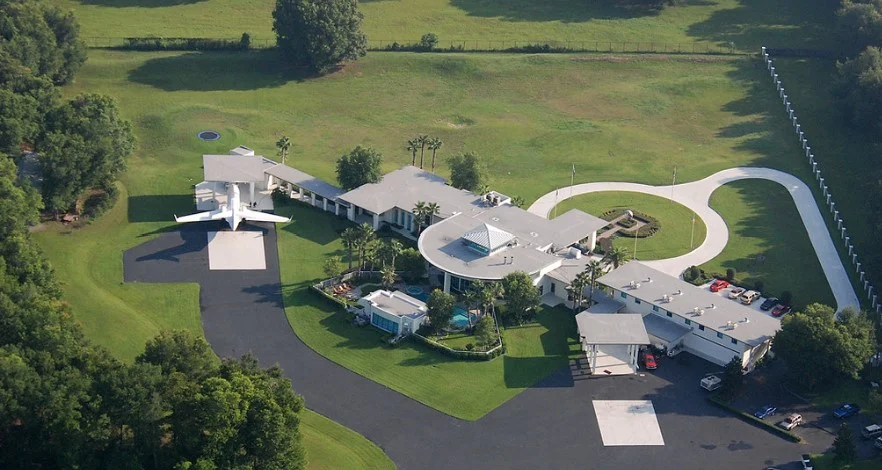
Architectural Planning & Spatial Layout: Designing Around a Runway
When analysing the extraordinary John Travolta house, the first thing we must understand is that this is not a conventional luxury mansion.
It is an aviation-integrated residential estate. That distinction changes the entire planning strategy.
Unlike traditional celebrity luxury homes that orient toward the street or landscape views, the John Travolta mansion is oriented toward the runway. The primary visual axis aligns with aircraft movement, not vehicular arrival.
As an architect, I find this incredibly intentional. The house is positioned to allow aircraft to taxi directly to the attached hangar. This means the hangar is not placed behind the residence like a service block — it is spatially integrated into the overall massing. And that is extraordinary.
Zoning Strategy: Public vs. Aviation vs. Private
From a spatial planning perspective, the estate operates in three clear zones:
- Aviation Zone – Hangar, taxiway access, runway alignment
- Public Living Zone – Formal living areas, reception spaces
- Private Residential Zone – Bedrooms, intimate family spaces
This layered zoning ensures that the operational demands of aircraft storage and movement do not disturb residential comfort. That balance is not easy to achieve.
Aircraft hangars require:
- Large-span structural systems
- Higher ceiling volumes
- Reinforced flooring
- Wide access doors
Integrating that scale into a home without making it feel industrial requires architectural sensitivity. And the John Travolta Florida home achieves this through proportion control and façade continuity.
Structural Considerations
Aviation hangars demand column-free interiors. This likely required steel truss systems or long-span framing solutions to maintain unobstructed aircraft parking. The structural grid for the hangar would differ significantly from the residential grid — yet visually, the transition remains seamless. That is refined architectural choreography.
The residential wing, in contrast, adopts more human-scaled volumes, maintaining warmth and domestic comfort. This contrast between monumental scale (hangar) and intimate scale (home) is what makes the estate architecturally compelling.
Circulation Logic: Movement as Design Language
Most homes are designed around pedestrian movement. This estate is designed around dual circulation systems:
- Human circulation
- Aircraft circulation
Taxi paths must be straight and obstruction-free. Driveways are secondary. Arrival can happen via jet. Let that sink in.
The extraordinary John Travolta house is one of the rare examples where aviation engineering directly informs architectural planning. And that is why this property stands apart from other celebrity homes in Florida.
The Extraordinary Hangar: Where Engineering Meets Lifestyle
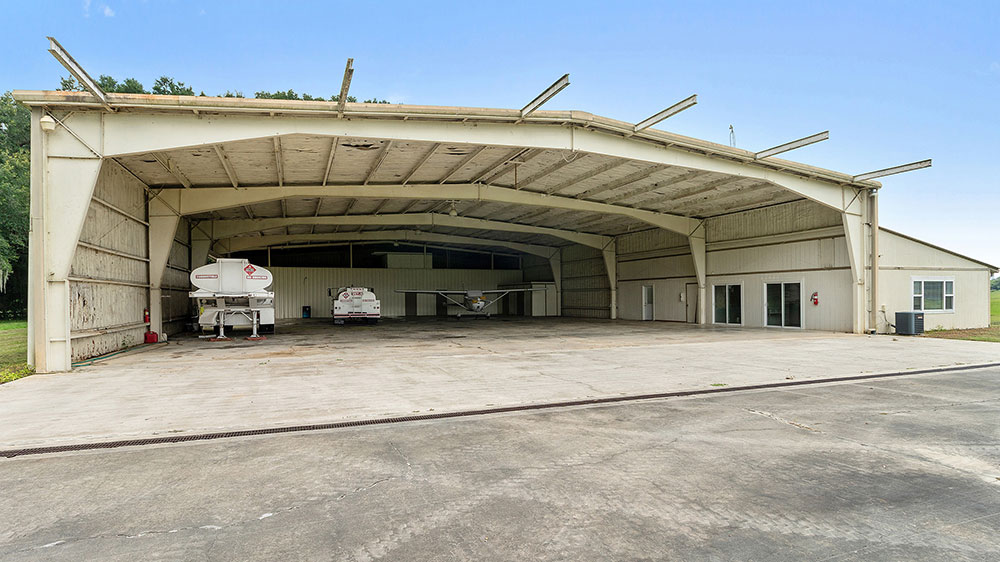
This is where the extraordinary John Travolta house truly separates itself from every other celebrity mansion. The hangar is not decorative. It is operational.
Designed to accommodate full-sized private jets, the scale alone demands serious structural engineering. Wide-span steel framing, reinforced slab foundations, and oversized aircraft doors are essential components in aviation architecture. But what makes this hangar extraordinary is its adjacency to domestic space.
In most airparks, hangars feel detached — industrial, utilitarian, mechanical. Here, the hangar feels curated.
It aligns visually with the residence. It respects the architectural rhythm. It becomes part of the estate narrative. As an architect, I appreciate the proportional discipline. The height of the hangar volume is balanced carefully against the residential massing, preventing it from overpowering the human-scale elements.
That restraint is rare. The transition between runway, hangar, and home is seamless. There is no abrupt break in design language. And that is intelligent planning. The John Travolta mansion demonstrates that functional infrastructure can coexist with refined luxury — if the design is handled with intention.
Exterior Façade & Architectural Expression: Refined Yet Purposeful

When observing the extraordinary John Travolta house, what immediately stands out is its restrained elegance. This is not an over-ornamented celebrity mansion screaming for attention. It is composed. Balanced. Purpose-driven.
The John Travolta mansion follows a Southern-inspired architectural language — a style commonly seen in refined Florida estates. Wide verandas, symmetrical elevations, and extended rooflines create a grounded, welcoming silhouette. But look closer. The proportions are carefully calculated.
The façade maintains horizontal emphasis, visually connecting the residence to the runway landscape. That horizontal stretch subtly echoes the linear geometry of aircraft wings and taxiways. That is not coincidence. That is conceptual alignment.
Material Palette & Visual Balance
The exterior materiality appears clean and timeless — light-toned walls, structured columns, and expansive glazing. Large windows serve dual purposes:
- Flooding interiors with natural light
- Creating direct visual connectivity to aircraft movement
In luxury residential architecture, glazing is often used to frame landscapes. Here, glazing frames jets. And that changes the experiential quality entirely. As an architect with 15 years in practice, I particularly admire how the residence avoids visual conflict between domestic warmth and aviation functionality.
The hangar volume could have easily disrupted the aesthetic harmony. Instead, its exterior treatment mirrors the main structure, preserving visual continuity across the estate. That restraint is what makes the extraordinary John Travolta Florida home architecturally sophisticated rather than theatrical.
Scale & Proportion: The Silent Luxury
One of the most intelligent decisions in the John Travolta house is scale modulation. The hangar volume is undeniably large — yet the residential façade maintains a human scale through:
- Repetitive column spacing
- Controlled window rhythm
- Layered roof articulation
- Transitional porch spaces
These architectural devices soften the monumental presence of aviation infrastructure. Luxury, in this case, is not loud. It is controlled. And that control is extraordinary.
Interior Design & Spatial Experience: Where Luxury Meets Lifestyle
Step inside the extraordinary John Travolta house, and the narrative shifts from aviation scale to personal comfort. The transition is intentional. From the expansive runway views and hangar volumes, you move into interiors that feel warm, grounded, and deeply residential. This contrast is not accidental. It is spatial choreography.
If you’re fascinated by how celebrity residences blur the line between aspiration and imagination, explore our deep dive into Superstar Vacation Homes: The Ultimate Architectural Escape Between Reality and Fantasy, where we analyze how luxury homes become experiential retreats rather than mere residences.
Open Planning with Purpose
The John Travolta mansion embraces open-plan living, but not in a way that feels generic or trend-driven. The living areas are likely positioned to capture direct views of the runway — a subtle but powerful design gesture.
Imagine relaxing in your living room while your aircraft sits framed through expansive glazing. That is not luxury. That is lifestyle integration.
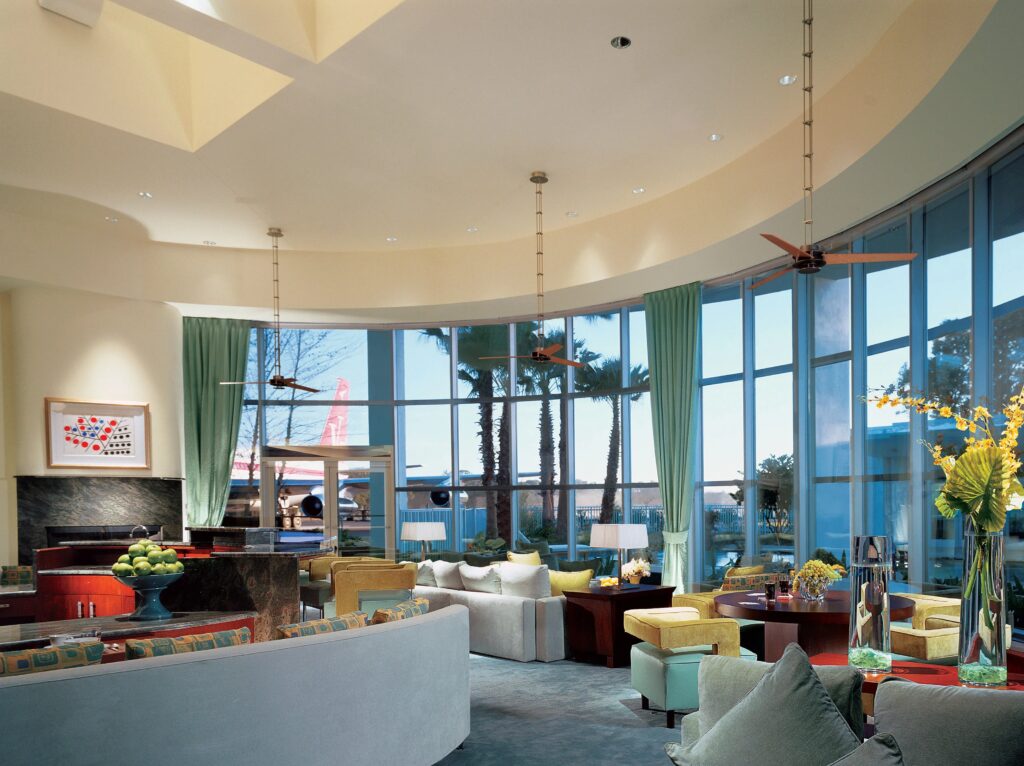
Large living spaces are anchored with classic detailing — refined flooring, coffered ceilings, and layered lighting strategies that balance volume with intimacy. As an architect, I always observe ceiling heights carefully. In aviation-themed homes, excessive volume can make interiors feel cold. Here, scale is controlled.
Double-height spaces are balanced with intimate rooms, ensuring comfort never feels compromised. That is extraordinary restraint.
Material Language: Comfort Over Flash
Unlike ultra-modern glass mansions seen in many celebrity homes in Florida, the extraordinary John Travolta Florida home leans toward timeless elegance. Expect:
- Rich wood finishes
- Polished stone surfaces
- Soft neutral palettes
- Structured millwork
These materials create visual warmth against the technical precision of the hangar environment. The design avoids excessive minimalism. It feels lived in. It feels personal. And that is rare in celebrity luxury estates.
Circulation & Flow
Interior circulation aligns with exterior logic. Movement flows organically from:
- Entry foyer
- Formal living spaces
- Private family zones
- Direct access points toward the hangar
That last connection is crucial. In most homes, garages are hidden. In the John Travolta house, aircraft access is celebrated. The internal layout likely accommodates quick transitions between living quarters and aviation space — a design decision that reinforces how central flying is to the homeowner’s identity.
Landscape & Site Planning: Designing for Air, Space & Silence
When analysing the extraordinary John Travolta house, one cannot ignore the importance of site planning. This is not a compact urban mansion. It is an estate designed around open skies.
Located within Jumbolair Aviation Estates, the property benefits from expansive plots, low-density development, and clear aviation corridors. And that freedom reflects in the landscape strategy.
Open Sightlines & Runway Orientation

In most luxury estates, landscaping is used to create privacy buffers. Here, landscaping performs a dual role:
- Maintaining aviation safety clearances
- Preserving uninterrupted runway visibility
Trees are carefully positioned to avoid obstruction zones. Open lawns dominate instead of dense vertical plantations. That is aviation-informed landscape architecture. And it’s extraordinary. The John Travolta Florida home embraces horizontal openness — echoing the runway geometry and reinforcing the estate’s linear visual language.
Privacy Without Isolation
One challenge in celebrity homes is balancing visibility and seclusion. The John Travolta mansion achieves privacy not through fortress-like walls, but through scale and spatial setbacks. The estate sits within a controlled-access aviation community, naturally limiting external intrusion. Landscape layering likely includes:
- Low hedging
- Strategic tree lines
- Soft transitional planting
This ensures privacy while maintaining aviation operability. That balance is subtle. And intelligent.
Climate-Responsive Planning
Florida’s climate demands:
- Storm resilience
- Wind resistance
- Heat mitigation
Wide roof overhangs and verandas are not just stylistic gestures. They are climate-responsive devices. They provide:
- Shade control
- Rain protection
- Transitional outdoor living
From an architectural standpoint, that makes the extraordinary John Travolta house contextually grounded rather than artificially imposed.
Property Value & Luxury Real Estate Positioning
The extraordinary John Travolta house is located inside Jumbolair Aviation Estates, one of the most exclusive residential airparks in the United States. Properties within this aviation estate are not valued merely by square footage. They are valued by runway access. That distinction matters. While exact numbers fluctuate with the Florida luxury real estate market, the John Travolta mansion has been widely estimated to be worth several million dollars — factoring in:
- Private runway adjacency
- Integrated aircraft hangar
- Large land parcel
- Custom residential construction
- Exclusive aviation zoning
But as an architect, I would argue the true value lies elsewhere.
What Makes This Estate Financially Unique?
In traditional luxury real estate, pricing is influenced by:
- Location
- Views
- Design quality
- Amenities
In aviation estates, another layer is added:
- Direct taxiway access
- Hangar capacity
- Aircraft maneuverability clearance
- Community runway maintenance
That makes the John Travolta Florida home a niche asset. You are not buying a mansion. You are buying infrastructure. That is extraordinary. Very few celebrity luxury homes in Florida combine private aviation engineering with residential elegance at this level. And rarity drives value.
Investment Perspective
From a long-term architectural investment standpoint, properties within aviation communities often retain desirability because:
- They serve a specific affluent demographic
- They offer functional advantages
- They cannot be easily replicated
You cannot simply add a runway to any mansion. The zoning, airspace permissions, and master planning must already exist. That exclusivity enhances the positioning of the extraordinary John Travolta house within the luxury real estate market.
What Architects & Designers Can Learn from the Extraordinary John Travolta House
The extraordinary John Travolta house is not simply a celebrity residence. It is a masterclass in purpose-driven architecture. As architects, we often design homes around trends — open plans, glass façades, statement staircases. But this estate reminds us of something fundamental: Great architecture begins with identity.
Interestingly, not all billionaires express identity through scale. In stark contrast to the extraordinary John Travolta house, Inside Elon Musk’s House : The Billionaire’s Surprising Minimalist Revolution explores how radical minimalism can be just as powerful as architectural grandeur.
In this case, aviation is not an afterthought. It is the central axis of design.
Design Around Lifestyle — Not Aesthetic
The John Travolta mansion teaches us that architecture must reflect the client’s core passion. The runway is not decorative. The hangar is not symbolic. They are functional infrastructure embedded into residential planning. That is extraordinary alignment.
Integrate Large-Scale Infrastructure Seamlessly
Blending industrial-scale aviation structures with domestic warmth is no small task. This project demonstrates:
- Intelligent zoning
- Structural hierarchy
- Proportion discipline
- Façade continuity
It proves that even monumental volumes can feel refined.
Context Matters More Than Spectacle
Unlike many celebrity homes in Florida that rely on excessive ornamentation, the John Travolta Florida home responds directly to site and climate. Wide overhangs. Horizontal massing. Runway alignment. Every design decision serves context. That is architectural maturity.
Conclusion
The extraordinary John Travolta house is not merely a celebrity mansion in Florida. It is a living demonstration of how architecture can evolve when it is shaped by passion rather than convention. In a world where luxury homes often compete through scale or spectacle, the John Travolta mansion stands apart because it is intentional. Every runway alignment, every hangar integration, every façade proportion reflects a lifestyle deeply rooted in aviation.
That is what makes it extraordinary. This estate does not separate infrastructure from intimacy. It merges them. It does not treat aircraft as accessories. It designs around them. And as an architect with over 15 years of observing high-end residential planning, I can confidently say this — homes that are built around identity endure longer in architectural memory than homes built around trends.
The John Travolta Florida home is not just valuable in real estate terms. It is valuable as a case study in purpose-driven design.
It teaches us that when engineering precision meets residential warmth, and when personal passion becomes the design brief, architecture transcends luxury. It becomes legacy. And that is the true measure of something extraordinary.