

Understand the complete 7-Step Design Process from pre-design to post-occupancy, and learn how architects and interior designers transform ideas into functional, beautiful spaces.

Creating a beautiful and functional space is not just about choosing colours, materials, furniture, or layouts. Behind every successful architectural or interior design project, there is a clear method that helps turn an idea into a finished space. This method is commonly known as the 7-Step Design Process.
Whether it is a luxury residence, commercial office, hospitality space, retail showroom, or modern apartment, every project moves through different stages before it becomes a real built environment. Each stage helps architects, interior designers, clients, contractors, and consultants work together with better clarity.
The Complete 7-Step Design Process from Client Brief to Post-Occupancy Review
The 7-Step Design Process covers everything from the first discussion with the client to the final review after the space is occupied. It ensures that the design is not only visually appealing but also practical, efficient, safe, and suitable for the people who will use it.
In this blog, we will understand the complete journey from pre-design to post-occupancy and explore what happens at every stage.
Pre-Design Stage
The pre-design stage is the foundation of every architectural and interior project. This is where the designer understands the client’s needs, lifestyle, budget, timeline, site conditions, and overall expectations.
For an architectural project, this stage may include studying the site location, climate, surrounding context, building regulations, soil conditions, access points, and zoning requirements. For an interior design project, it may include understanding the existing space, room sizes, natural light, ventilation, furniture needs, storage requirements, and user preferences.
During pre-design, architects and interior designers usually ask questions such as:
- What is the purpose of the space?
- Who will use the space?
- What is the expected budget?
- What design style does the client prefer?
- Are there any special functional requirements?
- What are the timelines and project limitations?
This step is very important because it helps avoid confusion later. A strong pre-design stage creates a clear direction for the rest of the project.

Site Analysis and Research
The second stage of the 7-Step Design Process focuses on research and analysis. Before creating any design concept, the designer must understand the space in detail.
In architecture, site analysis includes studying sun movement, wind direction, views, noise levels, neighbouring buildings, access roads, landscape, drainage, and local climate. These factors influence the placement of rooms, windows, open spaces, shading elements, and building orientation.
In interior design, site analysis includes checking wall positions, ceiling height, electrical points, plumbing lines, flooring condition, natural light, circulation, and existing structural elements. This helps the designer know what can be changed and what must remain fixed.
Research may also include studying design trends, sustainable materials, local construction techniques, user behaviour, and similar completed projects. This helps the design team create a solution that is both creative and practical.
A well-researched project often results in better planning, fewer mistakes, and improved design quality.
Concept Design and Space Planning
The concept design stage is where the project starts taking visual shape. In this stage, the architect or interior designer creates the first design ideas based on the client brief and site analysis.
This may include mood boards, sketches, zoning plans, layout options, inspiration images, colour palettes, material references, and basic 3D views. The aim is to communicate the overall design direction clearly.
For architectural projects, concept design may include the building form, massing, orientation, floor plans, open spaces, façade ideas, and relationship between indoor and outdoor areas.
For interior design projects, this stage focuses on furniture layout, room functionality, circulation, lighting mood, material themes, and the overall atmosphere of the space.
Space planning is one of the most important parts of this stage. A beautiful space will not work well if the layout is uncomfortable or inefficient. Good planning ensures that movement, furniture placement, storage, lighting, and daily use are all considered properly. This is also the stage where the client gives feedback and the design is refined before moving forward.

Design Development
Once the concept is approved, the project moves into design development. This stage adds more detail to the approved design idea.
In architecture, this may include detailed floor plans, elevations, sections, façade studies, structural coordination, service planning, material selection, and basic construction systems.
In interior design, this stage includes detailed furniture layouts, ceiling designs, lighting plans, flooring patterns, wall treatments, colour schemes, finishes, furniture selection, and décor direction.
The 7-Step Design Process becomes more technical during design development because the design team starts coordinating with other professionals. Structural engineers, MEP consultants, lighting designers, landscape designers, and contractors may be involved depending on the project type.
This stage helps ensure that the design is not only attractive but also buildable. It connects creativity with technical practicality. Today, digital tools in modern architecture are also helping designers improve visualization, coordination, and decision-making during the design development stage.
Clients also get a clearer idea of how the final space will look and function. Many design decisions are finalized at this stage, including materials, finishes, fixtures, furniture styles, and major design elements.
Construction Documentation and Approvals
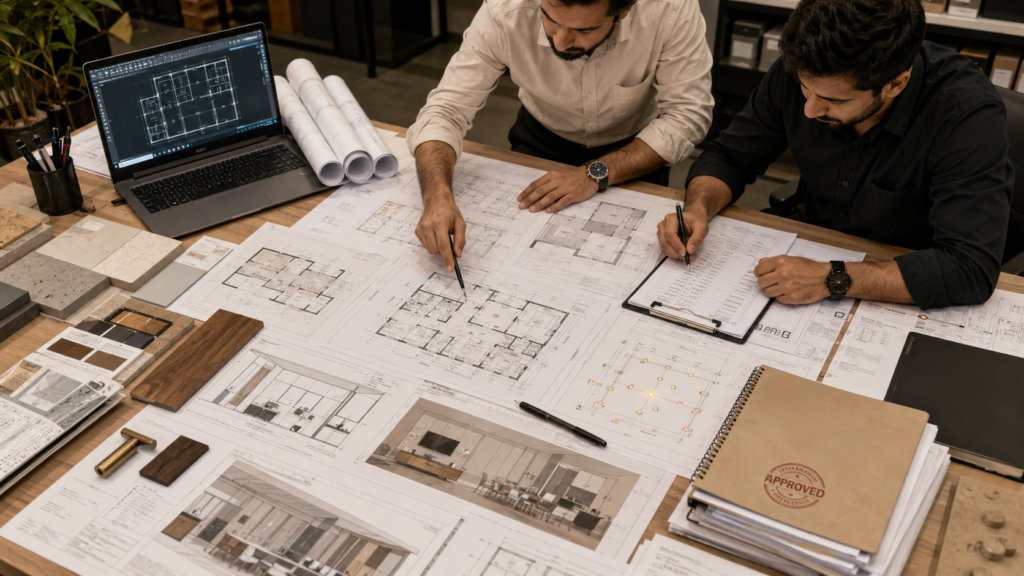
After the design is developed, the next step is to prepare detailed drawings and documents. These documents guide contractors, vendors, and site teams during execution.
Construction documentation may include:
- Architectural drawings
- Interior layout drawings
- Electrical plans
- Plumbing drawings
- Ceiling plans
- Flooring layouts
- Wall elevations
- Furniture details
- Material specifications
- Door and window schedules
- Lighting details
- Working drawings
For architectural projects, this stage may also involve submitting drawings for permissions, building approvals, or local authority clearances. For interiors, approvals may be required from building management, housing societies, commercial property owners, or fire safety consultants depending on the project.
Clear documentation is extremely important because it reduces site errors. It also helps contractors estimate costs, order materials, and execute the work according to the approved design.
Poor documentation can lead to delays, budget increases, and misunderstandings. That is why professional architects and interior designers spend significant time preparing accurate drawings and specifications.
Construction, Execution, and Site Supervision
The execution stage is where the design finally starts becoming real. Contractors, carpenters, electricians, plumbers, painters, fabricators, and other vendors begin working on-site.
During this phase, the role of the architect or interior designer is to ensure that the work is being done according to the approved drawings and design intent. Site visits, coordination meetings, quality checks, and progress reviews are commonly carried out.
In architectural projects, this stage may include foundation work, structural construction, masonry, roofing, façade installation, services, flooring, landscaping, and finishing.
In interior design projects, execution may include civil changes, false ceiling work, electrical wiring, plumbing modifications, flooring, wall finishes, modular furniture, custom furniture, lighting installation, décor styling, and final polishing.
The 7-Step Design Process helps keep this stage organized because every previous step has already created a clear plan. Still, site challenges can happen. Sometimes materials may not be available, site conditions may differ from drawings, or small changes may be needed during execution.
Good communication between the client, designer, and contractor is essential during this stage. Regular supervision helps maintain design quality and prevents costly mistakes.
Post-Occupancy Evaluation
The final stage is post-occupancy evaluation in the 7-Step Design Process. This step happens after the client starts using the completed space.
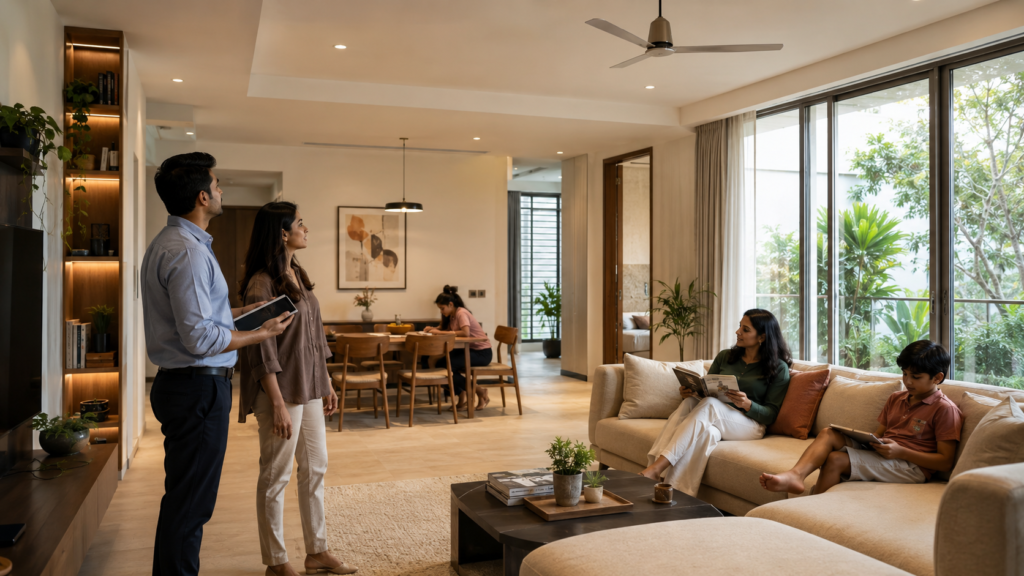
Many people think a project ends when construction is finished, but a truly successful design is tested only when people begin living or working in it. Post-occupancy evaluation helps understand whether the space is performing as expected.
The designer may review questions such as:
- Is the space comfortable to use?
- Is the lighting suitable?
- Is the furniture placement practical?
- Are there any maintenance issues?
- Is the ventilation working well?
- Is the storage enough?
- Does the space support the client’s daily routine?
For commercial spaces, post-occupancy review may also include employee productivity, customer experience, foot traffic, energy use, and operational efficiency.
This stage is valuable because it gives feedback for future improvements. It also helps architects and interior designers understand how their design decisions perform in real life.
A well-designed space should not only look good on the day of handover. It should continue to function beautifully over time.
Why the 7-Step Design Process Matters in Architecture and Interior Design
The 7-Step Design Process creates a structured path for completing a project successfully. It reduces confusion, improves communication, and helps all stakeholders understand what comes next.
For clients, this process provides confidence. They know how the project will move from idea to execution. For designers, it creates a professional workflow that supports creativity and technical accuracy. For contractors, it provides clear drawings and instructions.
This process also helps manage budget and time more effectively. When every stage is properly planned, there is less chance of unexpected changes, delays, or unnecessary expenses.
In architecture and interior design, good results depend on both creativity and process. A beautiful concept needs proper planning, documentation, coordination, and execution to become a successful space.
Benefits of Following the 7-Step Design Process
A structured design journey offers many benefits for residential, commercial, and hospitality projects.
- It helps create better communication between clients and designers.
- It improves space planning and functionality.
- It reduces design errors during construction.
- It supports better budgeting and timeline management.
- It allows smoother coordination with contractors and consultants.
- It improves the quality of the final outcome.
- It helps create spaces that are practical, comfortable, and visually appealing.
For architectural and interior design firms, this process also builds trust. Clients feel more comfortable when they understand each stage of the project clearly.
The Complete Journey from Concept to Completion
The journey from pre-design to post-occupancy is detailed, creative, and highly organized. Every stage plays an important role in shaping the final result. From understanding the client’s vision to studying the site, developing the design, preparing drawings, supervising execution, and evaluating the completed space, each step adds value to the project.
The 7-Step Design Process is not just a workflow. It is a complete roadmap that helps architects and interior designers create spaces that are beautiful, functional, sustainable, and meaningful.
For anyone planning a new home, office, showroom, hotel, or renovation project, understanding this process can make the entire journey smoother and more successful. A well-planned project does not happen by chance. It happens through thoughtful design, careful coordination, and a clear step-by-step approach.