
Introduction Luxury is no longer loud. It is thoughtful. It is curated. It is personal. And above all, it is transformative. Over the last decade, luxury home architecture has undergone a remarkable shift. What once relied heavily on grandeur, ornamentation, and sheer scale has evolved into something more refined, more intelligent, and far more human. Today’s high-end residential architecture is not merely about impressive square footage Many of these evolving ideas are also explored in our architecture trend insights on ArchThread.or premium finishes. It is about experience, spatial intelligence, emotional comfort, sustainability, and a deep connection between architecture and lifestyle. As someone who has spent over 15 years analyzing residential design, I find this evolution fascinating. The modern luxury home is no longer defined only by what it shows. It is equally defined by how it performs, how it breathes, how it adapts, and how it makes its inhabitants feel. That is precisely what makes this decade so important. Luxury home architecture has moved from display to dialogue. From excess to intention. From visual opulence to transformative living. 1. From Grandiosity to Intentional Elegance A decade ago, many luxury homes leaned on visual magnificence. Double-height foyers, ornate façades, elaborate detailing, and highly decorative interiors were often treated as the benchmark of prestige. The architectural language of luxury was, in many cases, built around immediate impact. Today, the visual grammar has changed. Modern luxury home design now celebrates restraint. Clean lines, proportion, scale, natural textures, and architectural clarity have become the …
Introduction
Luxury is no longer loud.
It is thoughtful.
It is curated.
It is personal.
And above all, it is transformative.
Over the last decade, luxury home architecture has undergone a remarkable shift. What once relied heavily on grandeur, ornamentation, and sheer scale has evolved into something more refined, more intelligent, and far more human. Today’s high-end residential architecture is not merely about impressive square footage Many of these evolving ideas are also explored in our architecture trend insights on ArchThread.or premium finishes. It is about experience, spatial intelligence, emotional comfort, sustainability, and a deep connection between architecture and lifestyle.
As someone who has spent over 15 years analyzing residential design, I find this evolution fascinating. The modern luxury home is no longer defined only by what it shows. It is equally defined by how it performs, how it breathes, how it adapts, and how it makes its inhabitants feel.
That is precisely what makes this decade so important.
Luxury home architecture has moved from display to dialogue.
From excess to intention.
From visual opulence to transformative living.
1. From Grandiosity to Intentional Elegance
A decade ago, many luxury homes leaned on visual magnificence. Double-height foyers, ornate façades, elaborate detailing, and highly decorative interiors were often treated as the benchmark of prestige. The architectural language of luxury was, in many cases, built around immediate impact.
Today, the visual grammar has changed.
Modern luxury home design now celebrates restraint. Clean lines, proportion, scale, natural textures, and architectural clarity have become the new signifiers of sophistication. Instead of overwhelming the eye, contemporary luxury homes invite a slower appreciation. The beauty is often embedded in the joinery, the material junctions, the way daylight enters a room, or the quiet precision of a perfectly framed courtyard.
This is not simplicity for the sake of trend.
It is a more mature architectural intelligence.
The last decade has taught luxury homeowners that true elegance rarely shouts. It reveals itself through balance, rhythm, craftsmanship, and confidence. That is why minimalist luxury homes and bespoke residential architecture have gained such strong relevance in premium housing conversations.
Key shift:
-
- Earlier luxury focused on ornament
-
- Today’s luxury focuses on intentionality
-
- Architectural value now lies in proportion, experience, and refined detailing
2. The Rise of Lifestyle-Driven Spatial Planning
One of the most transformative developments in luxury house design trends has been the move toward lifestyle-led planning. Homeowners are no longer asking only for more rooms. They are asking for better living.
That distinction matters.
The luxury home of today is deeply tailored. Architects are expected to understand routines, social habits, work patterns, wellness needs, privacy thresholds, entertaining preferences, and even emotional expectations from space. A home is now designed around the choreography of life rather than a checklist of functions.
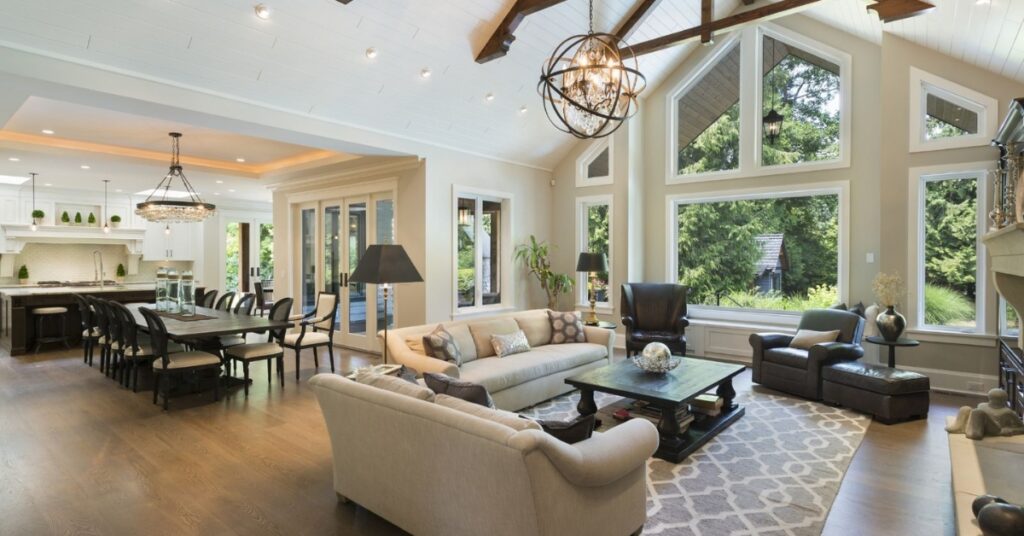
This has reshaped the planning framework of high-end residential architecture. Open-plan living remains important, but it is now more nuanced. Instead of one large, undefined volume, we see flowing yet layered spaces. Living, dining, lounge, library, and semi-outdoor areas are connected visually but articulated carefully to preserve intimacy and comfort.
This decade has also normalized spaces that were once considered secondary:
-
- home offices
-
- wellness rooms
-
- meditation corners
-
- private courtyards
-
- reading niches
-
- entertainment lounges
-
- chef-grade kitchens with social islands
-
- dressing suites and spa-like bathrooms
Luxury home architecture has become more personal because luxury itself has become more personal.
3. Indoor-Outdoor Living Became a Defining Feature
If I had to identify one design movement that most powerfully shaped luxury home architecture trends over the last decade, it would be the seamless blending of indoors and outdoors.
This shift has been more than aesthetic. It has been environmental, psychological, and architectural.
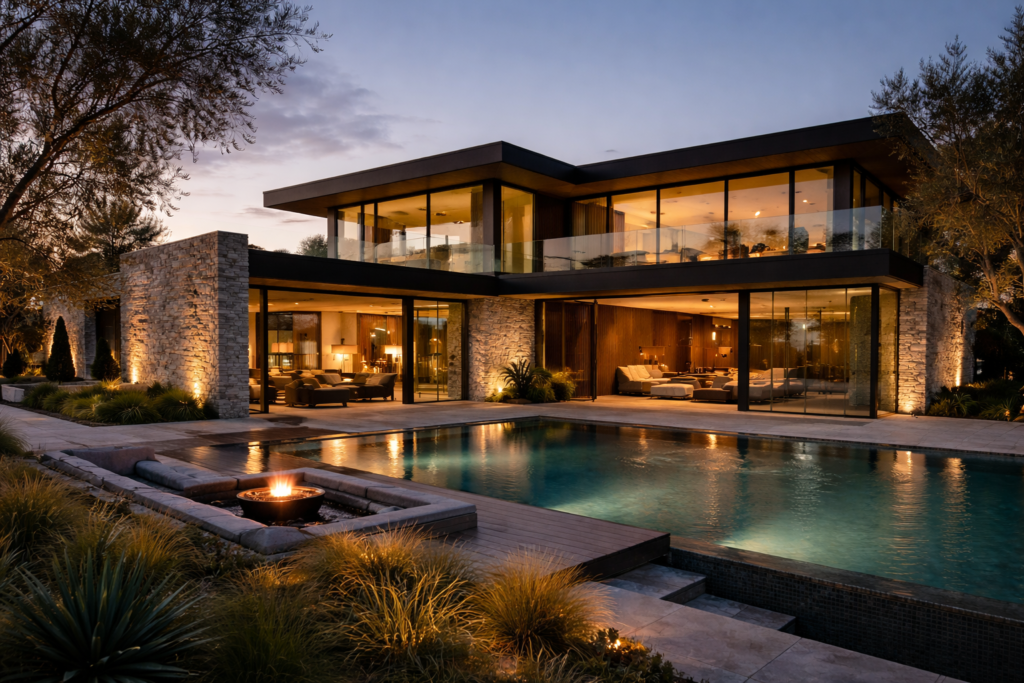
Large sliding glass walls, retractable systems, courtyards, shaded terraces, outdoor lounges, infinity-edge pools, landscape integration, and transitional thresholds have become central to contemporary luxury homes. The boundary between architecture and nature is now much softer.
Why has this mattered so much?
Because homeowners increasingly want a home that feels expansive without being disconnected. They want sunlight, cross-ventilation, framed views, natural textures, and outdoor extension spaces that enrich daily life. They want architecture that opens rather than encloses.
This is where biophilic luxury home design has gained serious importance. The integration of greenery, water features, natural light, and raw materials does more than improve visual appeal. It creates sensory depth. It reduces spatial fatigue. It reinforces wellness.
The luxury home is no longer treated as a sealed object.
It is treated as an ecosystem.
That is a transformative idea.
For reference and inspiration on contemporary residential design and landscape integration, an outbound resource such as ArchDaily’s residential architecture coverage can be naturally linked within this section.
4. Sustainability Entered the Luxury Conversation — And Stayed
There was a time when sustainability and luxury were treated as separate design narratives.
That is no longer the case.
Over the last decade, sustainable luxury architecture has moved from optional virtue to architectural expectation. Clients in the high-end segment increasingly appreciate that true luxury also means thermal comfort, material responsibility, energy intelligence, durability, and long-term value.
This has significantly transformed the architect’s role. Many architects today reference sustainable design frameworks outlined by the American Institute of Architects, which encourage energy-efficient and climate-responsive residential architecture.We are no longer designing only for visual prestige. We are designing for environmental performance and future resilience.
This shift is visible in many areas:
-
- passive solar orientation
-
- energy-efficient façades
-
- high-performance glazing
-
- natural ventilation strategies
-
- locally sourced materials
-
- low-impact finishes
-
- rainwater harvesting
-
- rooftop gardens
-
- solar integration
-
- durable material palettes that age gracefully
What is most interesting is that sustainability has not diminished luxury. It has elevated it.
A home that responds to climate intelligently is more sophisticated than one that simply consumes more. A house that remains cool through shading, insulation, and airflow demonstrates deeper architectural mastery than one that relies entirely on mechanical intervention.
That is where premium home architecture is heading. Not toward decorative excess, but toward responsible excellence.
5. Materials Became Richer, Warmer, and More Honest
One of the most noticeable shifts in luxury interior architecture and exterior expression has been the renewed appreciation for honest materiality.
A decade ago, many luxury residences embraced polished perfection. Gloss, shine, imported finishes, and overt display often dominated the palette. Today, there is a distinct movement toward tactile richness and material authenticity.
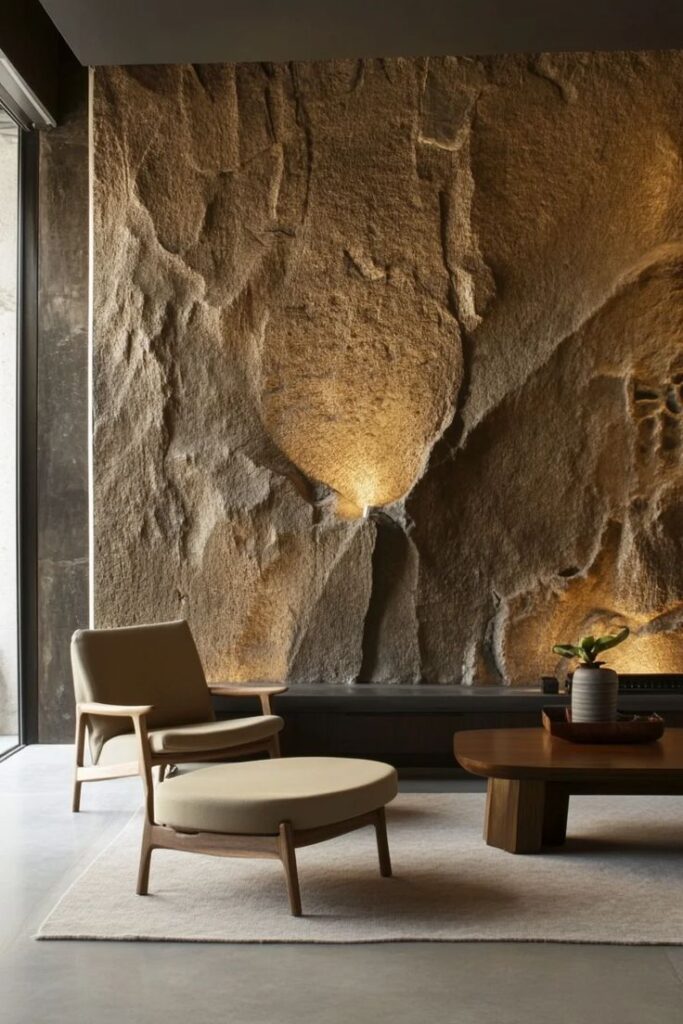
Natural stone with visible veining, brushed metal, lime plaster, warm timber, textured concrete, bronze accents, handmade tiles, and artisanal finishes now appear far more frequently in modern luxury home design. Materials are chosen not only for prestige, but for atmosphere. We have explored similar material-driven design approaches in our guide on modern interior architecture and spatial materiality.
That distinction is critical.
Architecturally, materials have become narrative devices. They speak of permanence, context, climate, craftsmanship, and age. A limestone wall feels different from a polished composite panel. A hand-finished timber ceiling carries a different emotional register than a synthetic imitation.
Luxury homeowners now want homes that feel grounded, sensory, and lasting. They are drawn to materials that mature beautifully rather than remain artificially flawless.
This is one of the most transformative aspects of the decade: luxury has become less superficial and more tactile.
6. Smart Homes Grew Up
The early phase of smart homes was often driven by novelty. Automated curtains, app-controlled lighting, and voice-enabled systems felt exciting, but they were frequently implemented as gadgets rather than integrated architectural systems.
Over the last decade, smart luxury homes have matured.
Technology in contemporary luxury homes is now expected to be discreet, Design publications such as Dezeen regularly explore emerging smart home technologies in residential architecture, showing how digital systems are becoming seamlessly embedded into spatial design. seamless, and deeply embedded into the design experience. The goal is not to showcase technology. The goal is to make life more intuitive.
Lighting scenes, climate control, acoustic systems, privacy settings, energy monitoring, motorized shading, integrated security, water management, and wellness-based automation are now commonly aligned with the architecture itself. The systems work best when they disappear into the background.
That is the real benchmark of intelligent luxury.
Technology should support spatial quality, not compete with it.
In my view, the most successful luxury houses of this decade are those where smart systems improve comfort and efficiency without disturbing architectural purity. Hidden speakers, flush panels, integrated lighting reveals, and silent automation all contribute to a more refined living environment.
The future of high-end residential architecture is not more visible technology.Technology is increasingly influencing architecture itself, something we recently discussed in our article on AI tools transforming architectural design workflows.
It is more invisible intelligence.
7. Wellness Became Central to Luxury Home Design
Perhaps the most profound change in luxury home architecture over the last decade has been the growing emphasis on wellness.
This is not just about spa bathrooms or home gyms.
It is about how the home supports physical, emotional, and mental well-being.
Architects and designers now think more carefully about daylight access, circadian lighting, acoustic calm, air quality, natural ventilation, privacy gradients, thermal comfort, material toxicity, and restorative spatial sequences. Homes are being designed to reduce stress and encourage ease.
Wellness in luxury home design is also reflected in dedicated spaces:
-
- yoga studios
-
- meditation rooms
-
- steam and sauna areas
-
- plunge pools
-
- spa bathrooms
-
- landscaped reflection courts
-
- indoor gardens
-
- silent reading rooms
-
- filtered natural-light lounges
What has changed is not simply the inclusion of these spaces.
It is the philosophy behind them.
Luxury is no longer only about what a home contains. It is about what a home enables. Better sleep. Better focus. Better recovery. Better connection. Better stillness.
That is a much deeper form of value.
And it is unquestionably transformative.
8. Privacy and Personal Sanctuary Gained New Importance
Another defining evolution in luxury house design trends has been the increasing value placed on privacy. As urban density rises and digital visibility becomes more intrusive, the luxury home has become a carefully composed sanctuary.
This has influenced both planning and massing.
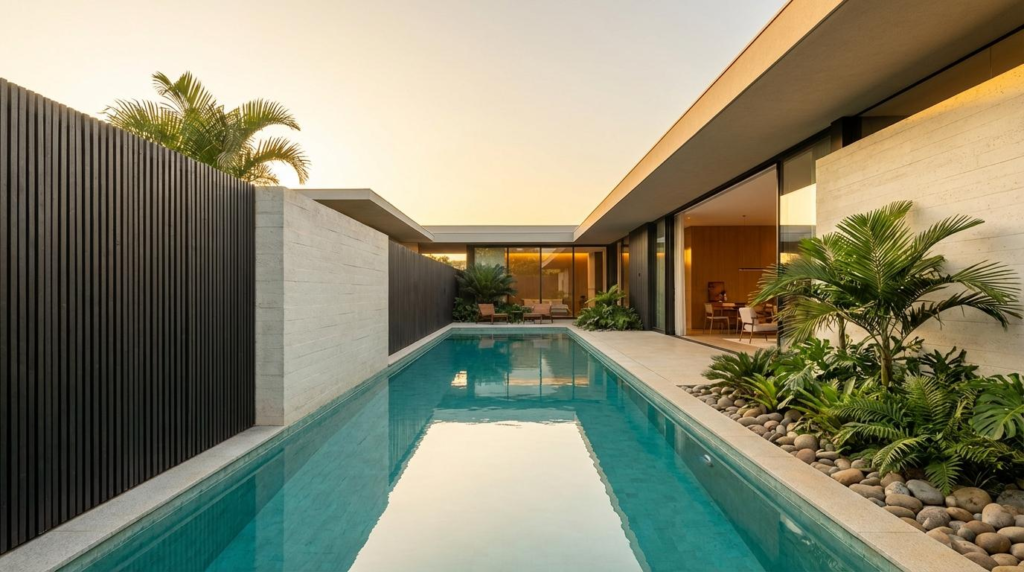
Architects are now using introverted courtyards, screened façades, layered entries, setback landscaping, internal gardens, floating walls, and controlled view corridors to offer privacy without sacrificing openness. Homes are being shaped to reveal selectively.
This approach is particularly elegant because it creates a richer spatial journey. Rather than exposing everything at once, the house unfolds. Arrival becomes curated. Transition becomes meaningful. Privacy becomes experiential, not defensive.
In many of the best contemporary luxury homes, the most dramatic spaces are inward-looking. They open to private courts, reflecting pools, sculpted landscape pockets, and framed sky views. This creates calm, exclusivity, and emotional comfort.
The message is clear.
Modern luxury is not only about visibility.
It is also about retreat.
9. Bespoke Design Replaced Formula Luxury
The most compelling luxury homes today do not look interchangeable.
That is because formula-driven luxury is losing relevance.
Over the last decade, bespoke residential architecture has become one of the clearest markers of true exclusivity. Clients now want homes that reflect site conditions, family culture, climatic context, design values, and daily rituals. The aspiration is no longer to copy a magazine-worthy look. It is to create a residence with identity.
This means architecture must become more responsive.
A coastal home should not feel like an urban penthouse translated horizontally. A desert residence should not perform like a temperate-climate villa. A multigenerational family home should not be planned like a weekend retreat. The finest luxury architecture responds to the specifics of place and person.
That is where design maturity is visible.
The architect is no longer delivering a style package.
The architect is shaping a living framework.
And in the high-end market, that level of customization is now one of the strongest differentiators.
10. Luxury Interiors Became More Architectural
There has also been a decisive shift in the relationship between architecture and interiors.
In the past, many luxury homes treated interior design as a later layer of embellishment. Over the last decade, luxury interior architecture has become far more integrated with the architectural concept from the start. This has improved coherence dramatically.
Now, ceiling profiles, wall planes, custom joinery, lighting recesses, stone compositions, staircase geometry, glazing proportions, and furniture placement are often developed as one holistic language. The interior is not added after the architecture. It is embedded within it.
This is why many contemporary luxury homes feel calmer and more resolved. There is less decorative conflict. More continuity. More discipline. More visual breathing space.
The result is an environment that feels elevated without feeling forced.
That is the hallmark of refined design.
11. The New Luxury Home Is Emotionally Intelligent
The greatest lesson from the last decade is this: luxury home architecture has become emotionally intelligent.
That may sound poetic, but it is also deeply practical.
The best homes today understand light. They understand silence. They understand movement. They understand how someone wants to arrive, pause, gather, work, rest, host, and withdraw. They understand that architecture is not a frozen object. It is a lived experience.
This emotional intelligence is what separates expensive homes from genuinely exceptional homes.
A house can have imported marble, advanced automation, and premium furnishings, yet still feel cold or unresolved. Meanwhile, a well-designed luxury home with strong planning, contextual sensitivity, natural light, tactile materials, and carefully calibrated scale can feel profoundly rich.
That is why the evolution of luxury home architecture matters.
It reveals a broader design truth.
People are no longer seduced by cost alone.
They are moved by meaning.
Conclusion
Luxury home architecture has changed more in the last decade than many people realize.
It has become more transformative, more sustainable, more intelligent, more human, and more deeply connected to lifestyle. The vocabulary of luxury has shifted from display to experience, from ornament to authenticity, and from static grandeur to adaptive living.
That is a healthy evolution.
As architects, designers, researchers, and enthusiasts, we should welcome it.
Because the finest homes of this era are not simply larger or more expensive. They are more thoughtful. They are more responsive. They are more emotionally resonant. They understand climate, context, technology, wellness, privacy, and individuality in a way that earlier luxury models often did not.
The last decade has not diminished luxury.
It has refined it.
And in many ways, that refinement is the most transformative design story of all.