
India is a country where buildings are not just about walls and roofs. They are a reflection of the country's architectural history, culture and spirituality. From temples carved out of mountains to new modern buildings Indian architecture shows how people have been innovative and skilled for centuries. Every building has an architectural story to tell. Some shows. Wealth, while others show spirituality and cultural identity. All these buildings together have shaped the way India looks and feels .In this blog we will explore the 10 architectural masterpieces in India that inspire people from all over the world. A special page about India's Architecture for further information in the form of videos and Youtube shorts is-https://www.youtube.com/@ArchitecturalDigestIndia. 1. Taj Mahal, Agra – The Symbol of Timeless Architecture The Taj Mahal is one of the admired buildings in the world. It was built by Mughal Emperor Shah Jahan in memory of his wife, Mumtaz Mahal. The Taj Mahal is an example of symmetry, proportion and beautiful details. Designed in white marble, the Taj Mahal represents the finest example of Mughal architecture, blending Persian, Islamic, and Indian architectural styles. The structure is renowned for its symmetrical planning, intricate carvings, large central dome, reflecting pools, and beautifully landscaped gardens. Architectural Highlights: * The Taj Mahal has a mix of Mughal and Persian styles * It is perfectly symmetrical * The marble work is very intricate * It has a central dome * The water gardens are very reflective 2. Lotus Temple, Delhi – Modern Spiritual …
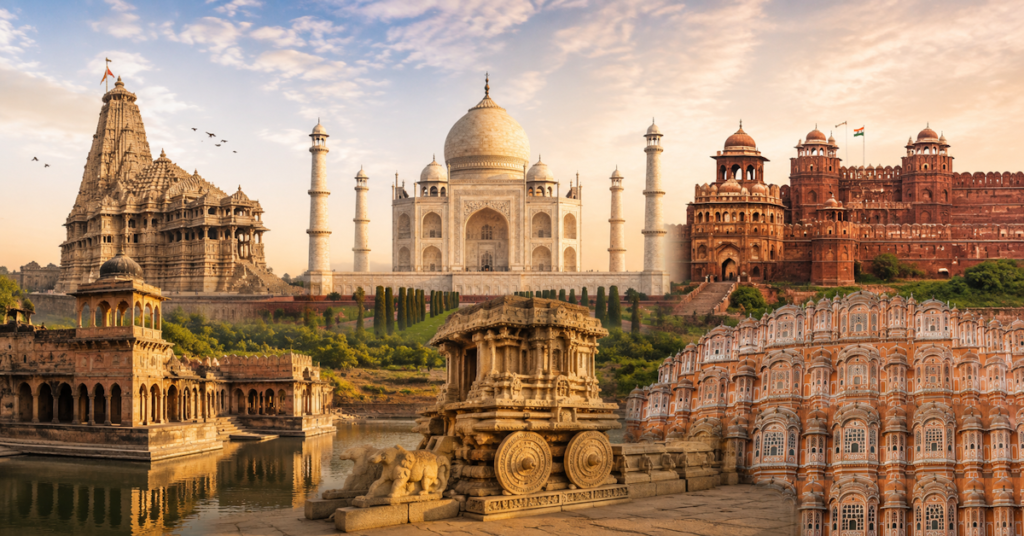
India is a country where buildings are not just about walls and roofs. They are a reflection of the country’s architectural history, culture and spirituality. From temples carved out of mountains to new modern buildings Indian architecture shows how people have been innovative and skilled for centuries.
Every building has an architectural story to tell. Some shows. Wealth, while others show spirituality and cultural identity. All these buildings together have shaped the way India looks and feels .In this blog we will explore the 10 architectural masterpieces in India that inspire people from all over the world. A special page about India’s Architecture for further information in the form of videos and Youtube shorts is-https://www.youtube.com/@ArchitecturalDigestIndia.
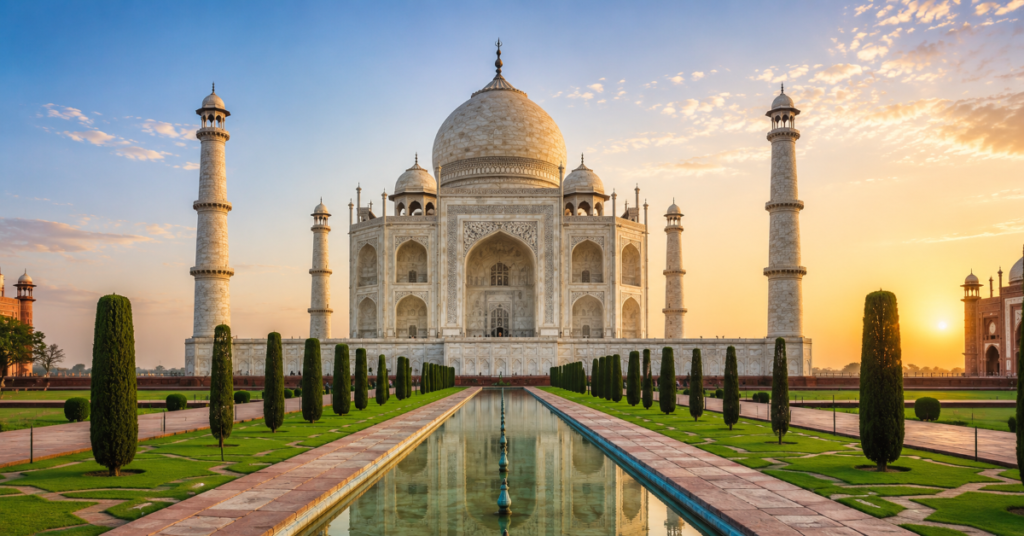
1. Taj Mahal, Agra – The Symbol of Timeless Architecture
The Taj Mahal is one of the admired buildings in the world. It was built by Mughal Emperor Shah Jahan in memory of his wife, Mumtaz Mahal. The Taj Mahal is an example of symmetry, proportion and beautiful details. Designed in white marble, the Taj Mahal represents the finest example of Mughal architecture, blending Persian, Islamic, and Indian architectural styles. The structure is renowned for its symmetrical planning, intricate carvings, large central dome, reflecting pools, and beautifully landscaped gardens.
Architectural Highlights:
* The Taj Mahal has a mix of Mughal and Persian styles
* It is perfectly symmetrical
* The marble work is very intricate
* It has a central dome
* The water gardens are very reflective
2. Lotus Temple, Delhi – Modern Spiritual Architecture
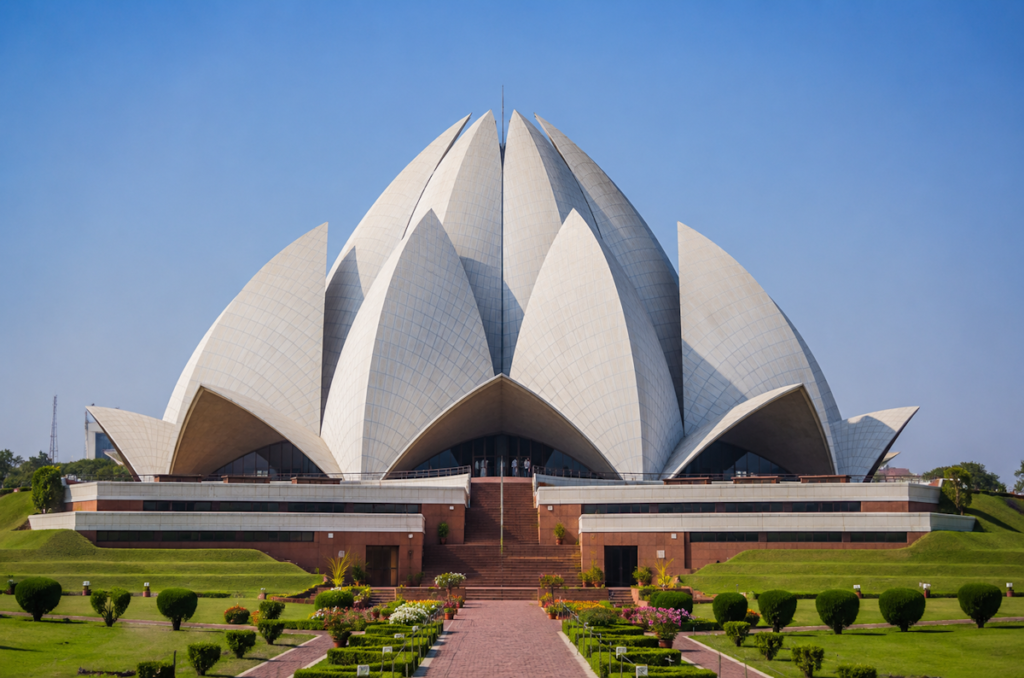
The Lotus Temple is a famous example of modern religious architecture in India. It is designed like a blooming lotus flower, which represents peace, purity and unity. Designed by architect Fariborz Sahba, the structure is composed of 27 free-standing marble petals arranged in clusters to form the appearance of a blooming lotus flower. The temple combines modern engineering with expressive architectural form, making it one of the most recognized contemporary landmarks in India.
Architectural Features:
* The temple has shaped concrete shells
* The outside is made of marble
* It has natural lighting systems
* The inside is very simple and spiritual
* The planning is integrated with the landscape
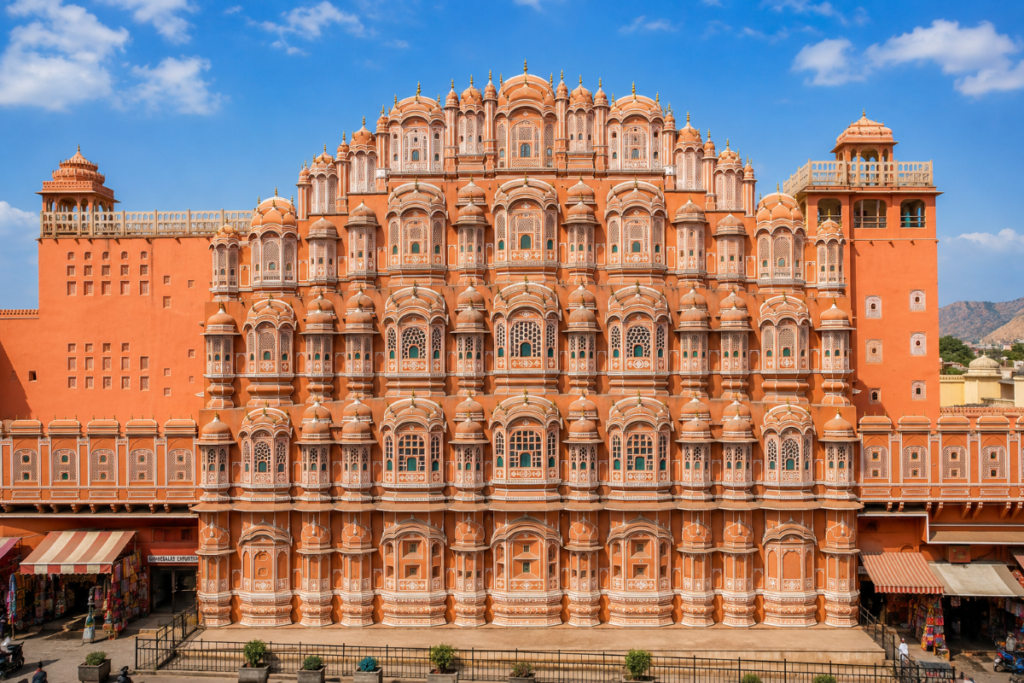
3. Hawa Mahal, Jaipur – The Palace of Wind
Hawa Mahal was built in 1799. It is one of the most recognized landmarks in Rajasthan. The five-story front has small windows that were designed for ventilation and to keep the building cool. The structure was designed to promote natural ventilation, keeping the interiors cool even during Rajasthan’s hot summers, which is why it earned the name “ Hawa Mahal.” Its five-story pyramidal form, intricate latticework, and decorative detailing make it an outstanding example of climate-responsive and ornamental architecture.
Architectural Highlights:
* Hawa Mahal has a Rajput style
* The front is made of sandstone
* It uses cooling techniques
* It has a window system
* The structure is very lightweight
4. Brihadeswarar Temple, Tamil Nadu – Engineering Beyond Its Time
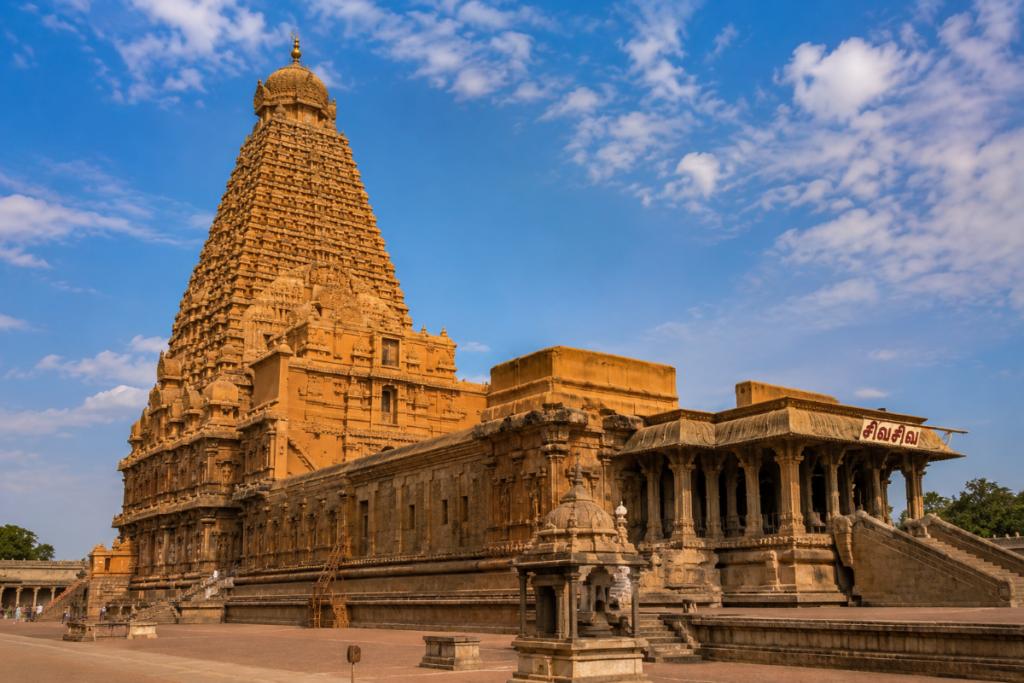
The Brihadeswarar Temple is one of the examples of Dravidian temple architecture. The Brihadeswarar Temple is one of the greatest architectural and engineering achievements in Indian history. Built during the reign of Raja Raja Chola I around 1010 AD, this UNESCO World Heritage monument represents the peak of Dravidian temple architecture. The temple complex features detailed sculptures, expansive courtyards, pillared halls, and beautifully crafted frescoes that reflect the artistic excellence of the Chola dynasty. Its symmetrical planning and advanced engineering techniques demonstrate the sophistication of ancient South Indian architecture.
Key Architectural Features:
* The temple is made of granite blocks
* It has a temple tower
* The carvings and sculptures are very intricate
* The planning is very symmetrical
* The stone engineering is precise
5. Gateway of India, Mumbai – Colonial Grandeur Meets Indian Identity
The Gateway of India is located on the waterfront in Mumbai and combines Indo- architecture with colonial-era design influences. Built during the British colonial period, the monument reflects a unique blend of European and Indian architectural influences known as the Indo-Saracenic style. Designed by architect George Wittet , the Gateway of India was completed in 1924 using yellow basalt stone and reinforced concrete. The structure combines elements of Hindu, Muslim, and European architectural styles, featuring grand arches, intricate latticework, and decorative detailing inspired by Gujarati architecture.
Architectural Elements:
* The gateway is made of basalt stone
* It has Hindu details
* The archway is very grand
* It is placed on the waterfront
* The scale is very monumental

6. Sun Temple, Konark – Architecture Inspired by Motion
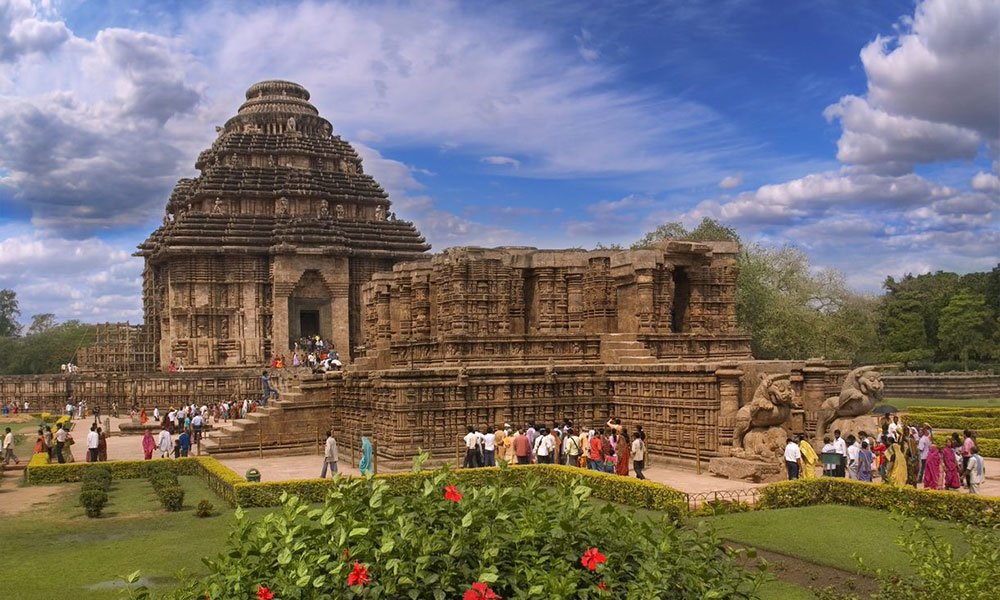
The Sun Temple at Konark is designed like a stone chariot dedicated to the Sun God. Built during the 13th century by King Narasimhadeva I of the Eastern Ganga dynasty, the temple was dedicated to the Sun God, Surya. The temple is designed in the form of a gigantic stone chariot with twelve intricately carved wheels and seven horses, symbolizing the movement of the sun across the sky. Constructed primarily from stone, the monument showcases the brilliance of Kalinga architecture through its detailed sculptures, ornamental carvings, and monumental scale.
Architectural Highlights:
* The temple has a Kalinga style
* It has carved wheels and horses
* The alignment is astronomical
* The sculptures tell stories
* The planning is symbolic
7. Victoria Memorial, Kolkata – A Blend of Mughal Architecture
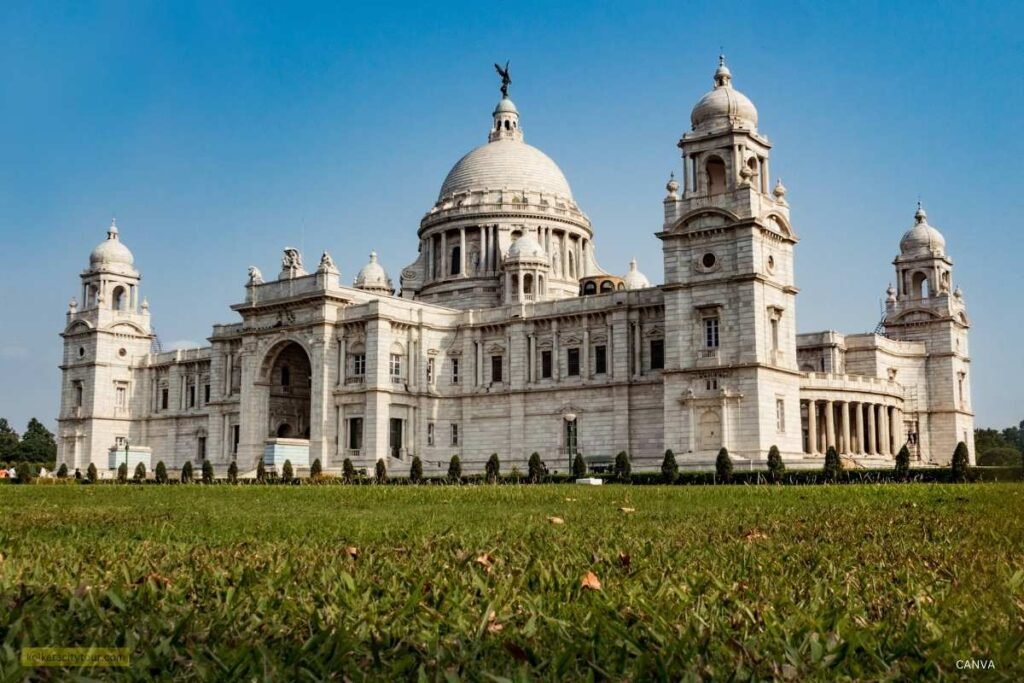
The Victoria Memorial is one of India’s most elegant colonial-era architectural landmarks. Built in memory of Queen Victoria after her death in 1901, the monument represents a unique fusion of British classical architecture and traditional Indian design elements. The Victoria Memorial houses a museum featuring historical artifacts, paintings, manuscripts, sculptures, and exhibits related to British India and Kolkata’s colonial history. The monument’s symmetrical planning and classical detailing reflect the architectural grandeur of the British Empire during that period.
Key Features:
* The memorial is made of Makrana marble
* It has a dome
* The details are inspired by architecture
* The gardens are very large and landscaped
* The planning is very symmetrical
8. Mysore Palace, Karnataka – Royal Grandeur in Architecture
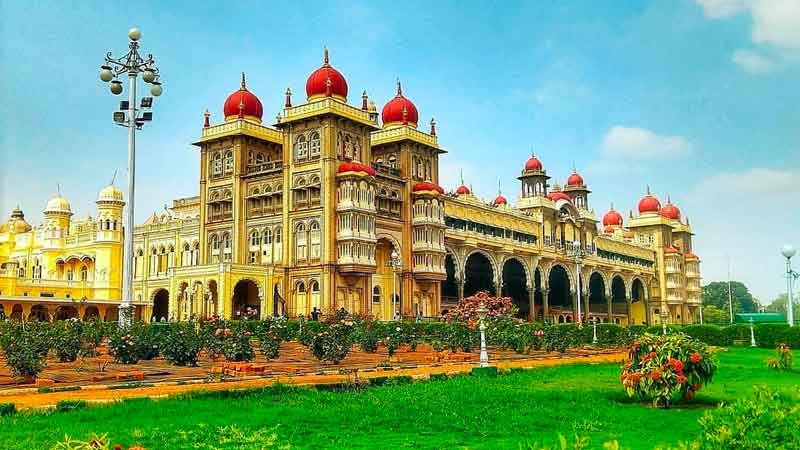
Mysore Palace is known for its interiors and royal architectural identity known for its grand domes, intricate interiors, decorative ceilings, and monumental spatial planning, the palace reflects the richness of the Wadiyar dynasty and the artistic excellence of South Indian royal architecture. Mysore Palace is famous for its grand domes, arched corridors, intricately carved doors, stained glass ceilings, and lavishly decorated halls such as the Durbar Hall and Kalyana Mantapa . The palace is especially renowned for its spectacular illumination during festivals and special occasions, when thousands of lights transform the structure into a glowing architectural landmark.
Architectural Highlights:
* The palace has an Indo- style
* It has domes and arches
* The ceilings are very ornamental
* The stained glass work is very detailed
* The ceremonial halls are large
9. Sanchi Stupa, Madhya Pradesh – Ancient Buddhist Architectural Wisdom
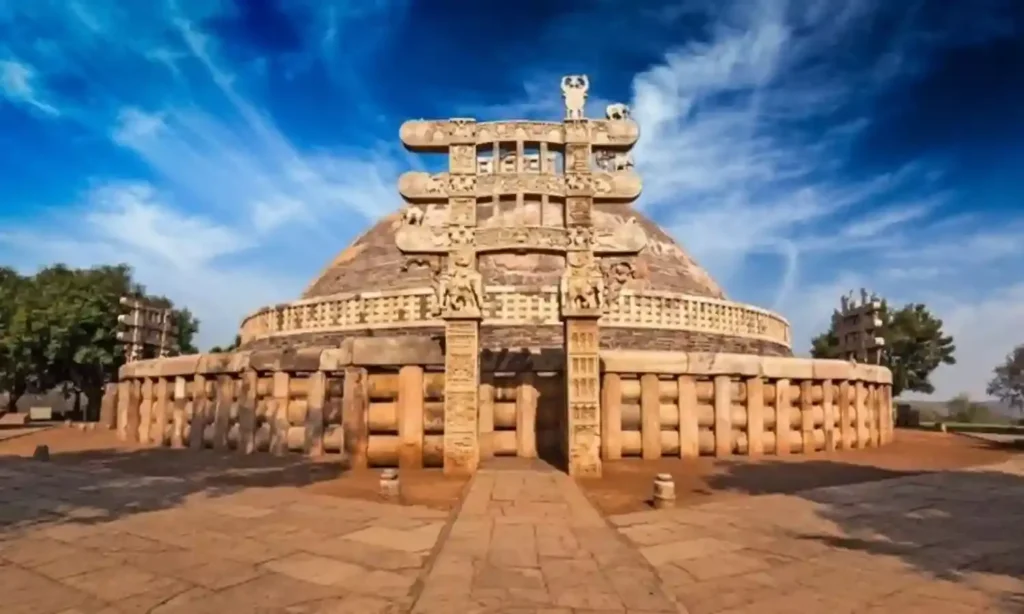
The Sanchi Stupa is one of India’s surviving stone structures and a major symbol of Buddhist architecture. Built originally during the reign of Emperor Ashoka in the 3rd century BCE, the Sanchi Stupa represents the spiritual, symbolic, and architectural foundations of early Buddhist design. The architectural layout of Sanchi reflects the principles of early Buddhist architecture, emphasizing simplicity, symbolism, and spiritual harmony. The circular pathway around the stupa was designed for pradakshina (ritual circumambulation), an important practice in Buddhist worship.
Architectural Features:
* The stupa has a sacred geometry
* It has stone railings and gateways
* The planning is symbolic
* The structure is very simple
* The carvings tell stories
10. Statue of Unity Gujarat – Modern Engineering Marvel
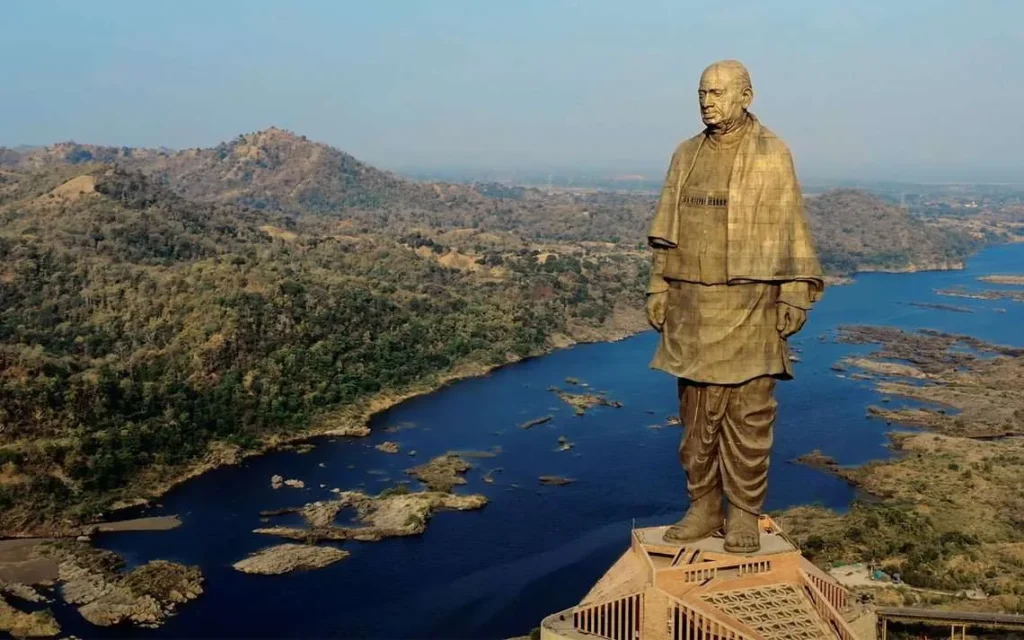
The Statue of Unity has become one of India’s iconic modern architectural and engineering achievements. Standing at an extraordinary height of 182 meters (597 feet), it is currently the tallest statue in the world and a global symbol of structural innovation, national pride, and large-scale public architecture. he statue depicts Sardar Patel in a realistic walking posture, symbolizing strength, leadership, and national unity. The complex surrounding the monument includes exhibition halls, viewing galleries, landscaped gardens, museums, and public spaces designed to enhance the visitor experience.
Architectural and Engineering Features:
* It is the world’s tallest statue
* It has reinforced engineering
* The design is resistant to wind
* It has public viewing galleries
* The planning is integrated with the landscape
How Indian Architecture Has Evolved Over Time?
Indian architecture has changed a lot over the centuries going through different dynasties, religions, cultural movements and technological advancements.
Major Architectural Phases in India
* Old temple architecture
* Mauryan structures
* Mughal architecture
* architecture
* Post-independence modernism
* Sustainable architecture
Today India’s architectural identity combines preserving heritage with innovative urban planning.
Key Architectural Elements Commonly Seen in Indian Design
1-Climate-Responsive Architecture:
Old buildings used passive cooling techniques long before modern sustainable systems.
2-Courtyard Planning:
Internal courtyards improved ventilation, lighting and social interaction.
3-Symbolic Geometry:
Sacred geometry and spatial alignment played roles in temples and monuments.
4- Material Innovation:
Stone, marble, sandstone, timber and modern concrete systems have shaped architectural evolution.
Architecture as India’s Cultural Identity
India’s masterpieces are more than just tourist attractions. They are reflections of civilization, culture, engineering and artistic evolution.From temples and royal palaces to modern engineering icons Indian architecture continues to influence how the world understands spatial design and cultural expression.As architecture evolves globally India remains one of the countries where history and modernity coexist so powerfully within the built environment.
These masterpieces remind us that architecture is not about building structures. It is about creating identity, memory and legacy. The Taj Mahal, the Lotus Temple and other Indian architectural masterpieces continue to inspire people because they are a part of India’s identity. Indian architecture is a reflection of the country’s history, culture and spirituality. It is a combination of meaning, engineering precision, artistic craftsmanship, climate intelligence and cultural storytelling. Indian architecture is not about buildings. It is about creating identity, memory and legacy. The top 10 architectural masterpieces in India are a testament to the country’s cultural heritage and its ability to inspire people from all over the world.
Outside India there are many more masterpieces of architectural wonders ,one of them is the most talked –“The Statue Of Liberty”.