

Not Only in Real life but Movies too have the symbolic Colosseum in them due to its high value among individuals There are few buildings in the world that people still admire centuries after they were built. The Roman Colosseum is one of them. It stands in the heart of Rome. It is more than just an old theater. It shows how good ancient Romans were at engineering and is a symbol of their culture. The Colosseum has changed over time. It used to be a place for entertainment. Now it is one of the most famous historical monuments in the world. Even though it has been damaged by disasters, political changes and city growth it still shows how innovative and ambitious the ancient Romans were. Today it represents the power of architecture and how old buildings can shape society. 1-The Origin and Timeline of the Roman Colosseum The Roman Colosseum also known as the Flavian Amphitheatre was built between 70-72 AD by Emperor Vespasian and finished by his son Titus in 80 AD. It was built on the site of Emperor Nero's palace as a gift to the people of Rome. When it was built the Colosseum was a change in how cities and buildings were planned. Making exclusive spaces for the emperor Roman rulers created a public entertainment arena that could hold over 50,000 people. Timeline of the Colosseum 1:70–80 AD - Construction Period * Emperor Vespasian started building it * Emperor Titus finished it * It became …
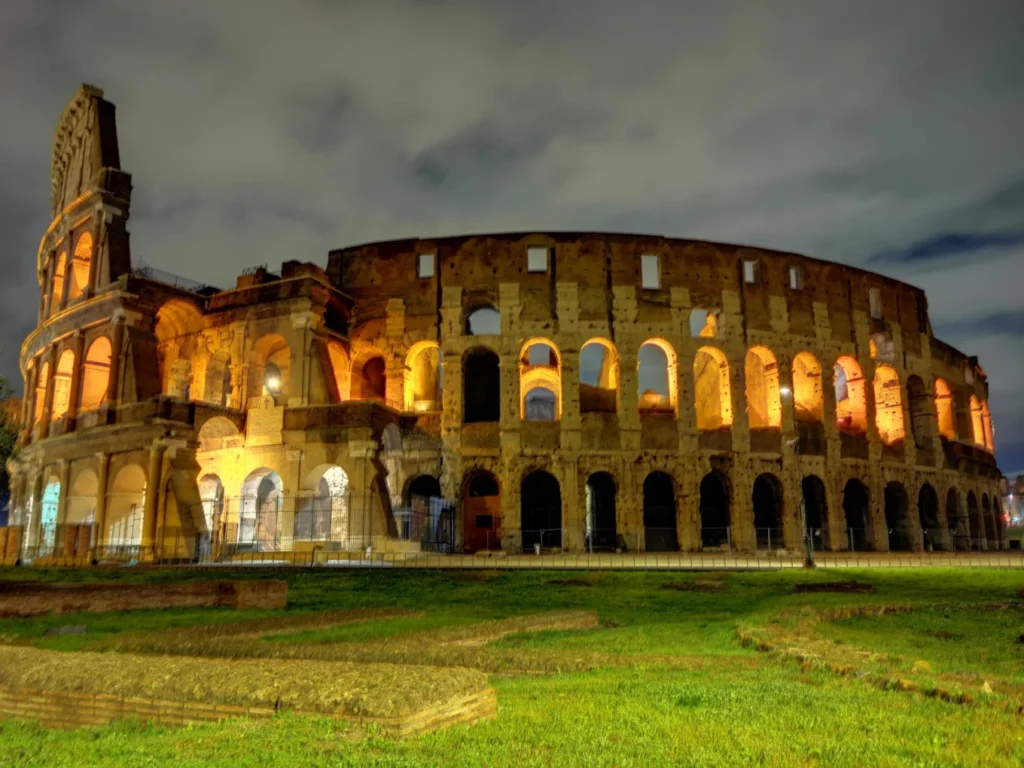
Not Only in Real life but Movies too have the symbolic Colosseum in them due to its high value among individuals
There are few buildings in the world that people still admire centuries after they were built. The Roman Colosseum is one of them. It stands in the heart of Rome. It is more than just an old theater. It shows how good ancient Romans were at engineering and is a symbol of their culture. The Colosseum has changed over time. It used to be a place for entertainment. Now it is one of the most famous historical monuments in the world. Even though it has been damaged by disasters, political changes and city growth it still shows how innovative and ambitious the ancient Romans were. Today it represents the power of architecture and how old buildings can shape society.
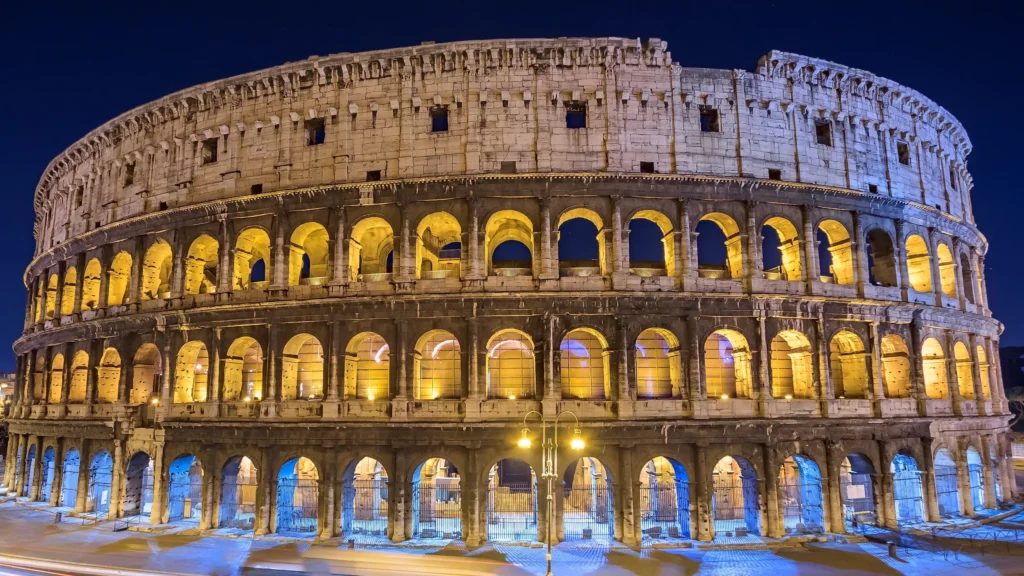
1-The Origin and Timeline of the Roman Colosseum
The Roman Colosseum also known as the Flavian Amphitheatre was built between 70-72 AD by Emperor Vespasian and finished by his son Titus in 80 AD. It was built on the site of Emperor Nero’s palace as a gift to the people of Rome. When it was built the Colosseum was a change in how cities and buildings were planned. Making exclusive spaces for the emperor Roman rulers created a public entertainment arena that could hold over 50,000 people.
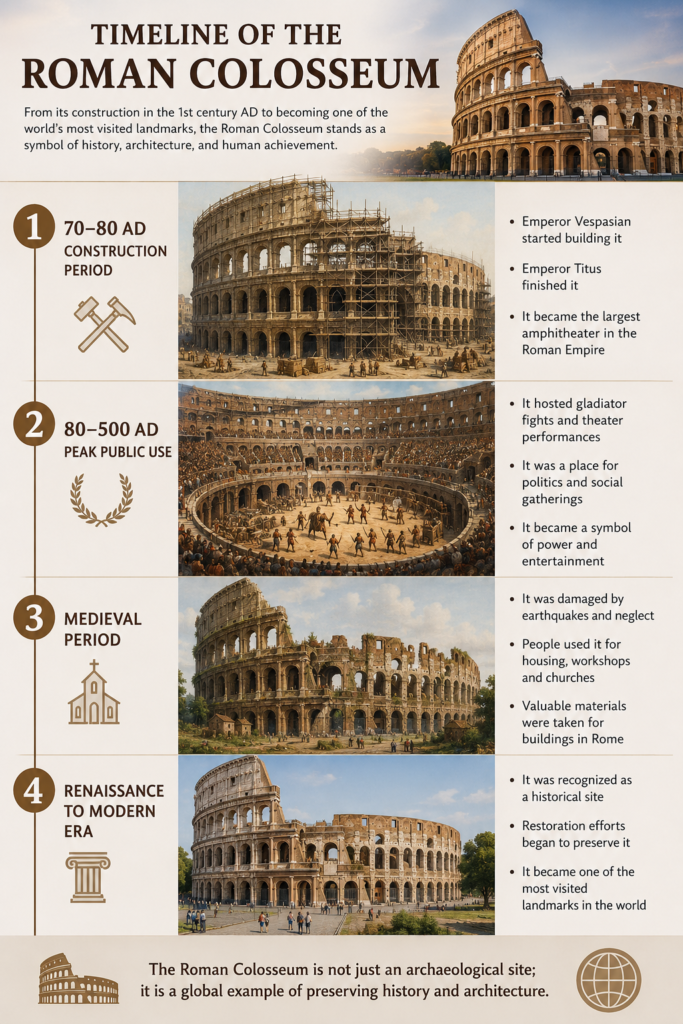
Timeline of the Colosseum
1:70–80 AD – Construction Period
* Emperor Vespasian started building it
* Emperor Titus finished it
* It became the amphitheater in the Roman Empire
2: 80–500 AD – Peak Public Use
* It hosted gladiator fights and theater performances
* It was a place for politics and social gatherings
* It became a symbol of power and entertainment
3: Medieval Period
* It was damaged by earthquakes and neglect
* People used it for housing, workshops and churches
* Valuable materials were taken for buildings in Rome
4: Renaissance to Modern Era
* It was recognized as a historical site
* Restoration efforts began to preserve it
* It became one of the visited landmarks in the world
The Roman Colosseum is not just an archaeological site; it is a global example of preserving history and architecture.
2-Architectural Style and Evolution of the Roman Colosseum
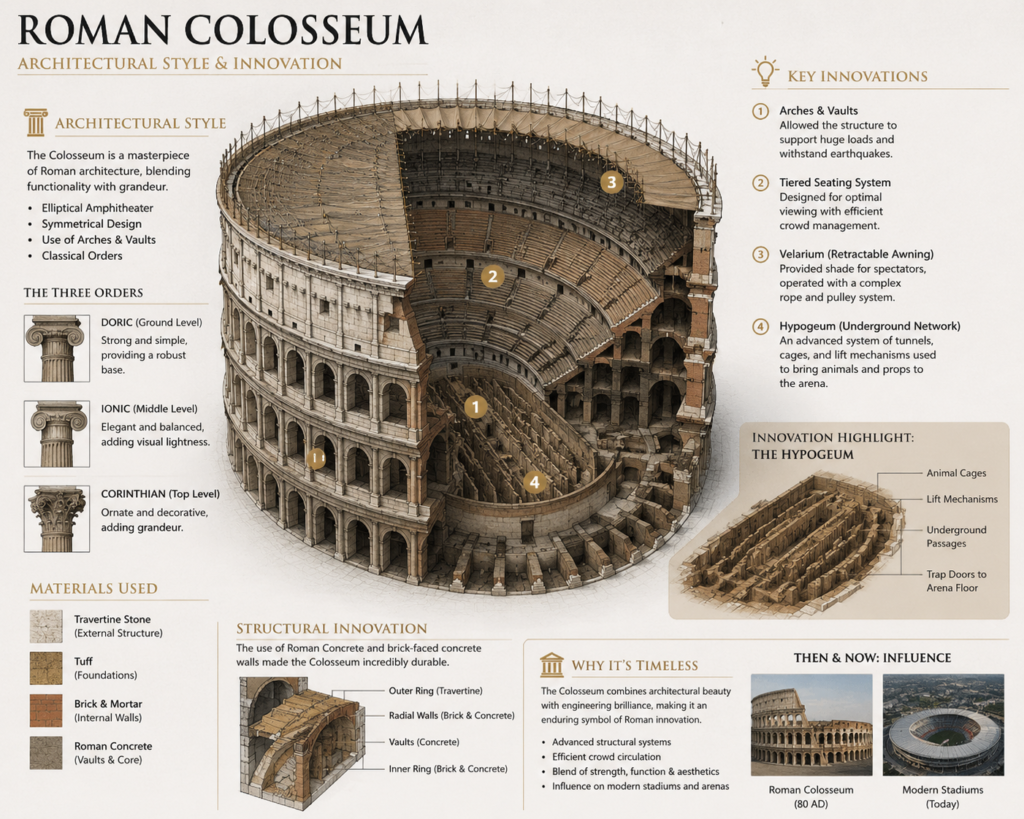
The Roman Colosseum is one of the examples of ancient Roman architecture and engineering. Its design combined functionality, innovation and beauty in ways that influenced architecture for centuries.
Architectural Characteristics
* It has a shape for good visibility and crowd control
* It uses arches and vaults for stability
* It has an exterior with Doric, Ionic and Corinthian columns
* It has circulation systems for efficient movement
The Colosseum’s architecture was revolutionary because it emphasized both size and organization. The use of arches created strength while reducing weight.Over time Roman architectural techniques spread throughout Europe. Inspired Renaissance, Neoclassical and modern stadium design. Many sports arenas still follow the principles of the Roman Colosseum.
3-Engineering Innovations and Significant Inventions of Roman Colosseum
The Roman Colosseum was not impressive but also technologically advanced. Roman engineers introduced innovations that contributed to its longevity and functionality.
Major Engineering Innovations
* Use of concrete for stronger foundations
* Complex underground chambers known as the hypogeum
* Pulley and lift systems for transporting animals and stage elements
* system: a retractable fabric canopy for shade
* Sophisticated drainage and water management systems
These innovations showed the Romans advanced understanding of engineering, materials and public infrastructure. Architects and engineers still study the Colosseum to understand construction techniques.
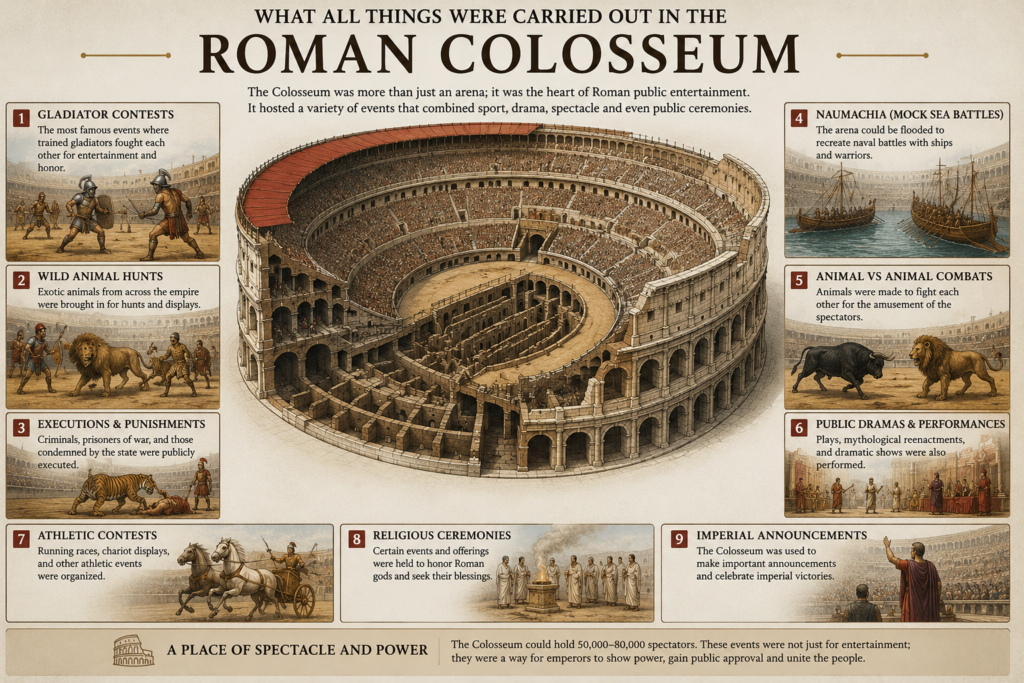
4-Purposes of the Roman Colosseum Throughout History:The Roman Colosseum has served functions beyond entertainment.
1: Gladiatorial Contests: It was originally designed for gladiator battles, which were spectacles.
2: Public Entertainment:It hosted theater performances, mock naval battles and public celebrations.
3: Political Symbolism:Roman emperors used events at the Colosseum to strengthen support.
4:Religious and Cultural Site:During the Christian periods it gained spiritual significance.
5:Tourism and Heritage Preservation:Today it is one of the world’s most visited heritage sites attracting millions of tourists.
5- Emotional and Cultural Importance to Locals
For the people of Rome the Roman Colosseum is more than a tourist attraction. It represents continuity between the city’s past and modern identity.
Locals view it as a reminder of Rome’s influence, resilience and architectural brilliance. Despite damage and urban transformation it remains deeply embedded in the city’s memory. Festivals, public events and preservation campaigns reinforce its importance.
The monument also serves as a symbol of pride for Italians representing the influence of Roman civilization on art, governance, engineering and architecture.
6-The Evolution of Architecture and Its Role in Society
The Roman Colosseum reflects how architecture evolves alongside society. What was once a structure for entertainment has now become a cultural and historical landmark.
Architecture today extends beyond construction; it shapes urban identity, preserves cultural heritage and influences how communities interact with their environment. Historical monuments like the Colosseum demonstrate how architecture can survive changing values.
Modern architecture still borrows principles from engineering particularly in stadium planning and public infrastructure design. This ongoing influence highlights how architecture acts as a bridge between achievement and future innovation.
7-Blooming Till Date since its Inception
The Roman Colosseum remains one of the extraordinary achievements in architectural history. Its ability to combine engineering precision, monumental scale and cultural symbolism has allowed it to survive as an icon. More than an ancient amphitheater, the Colosseum tells a story of innovation, social evolution and architectural success. It reflects how structures can transcend their purpose and continue shaping society.
In the world where architecture constantly evolves, the Roman Colosseum continues to stand as a reminder that great architecture is not only built to function; it is built to endure and connect generations. The Roman Colosseum is widely recognized as a masterpiece of circular architectural planning because of its curved amphitheater design, even though its actual geometry is elliptical. Its form revolutionized public architecture and continues to influence stadium and arena design across the world today.
The Roman Colosseum’s elliptical planning is also considered one of history’s earliest and most influential examples of circular architectural design, a concept explored further in our detailed study on circular architecture.