

This blog explores the most luxurious and most discussed properties connected to Elon Musk, while also looking at what designers can learn from their architecture, interiors, privacy planning, spatial efficiency, and lifestyle storytelling.
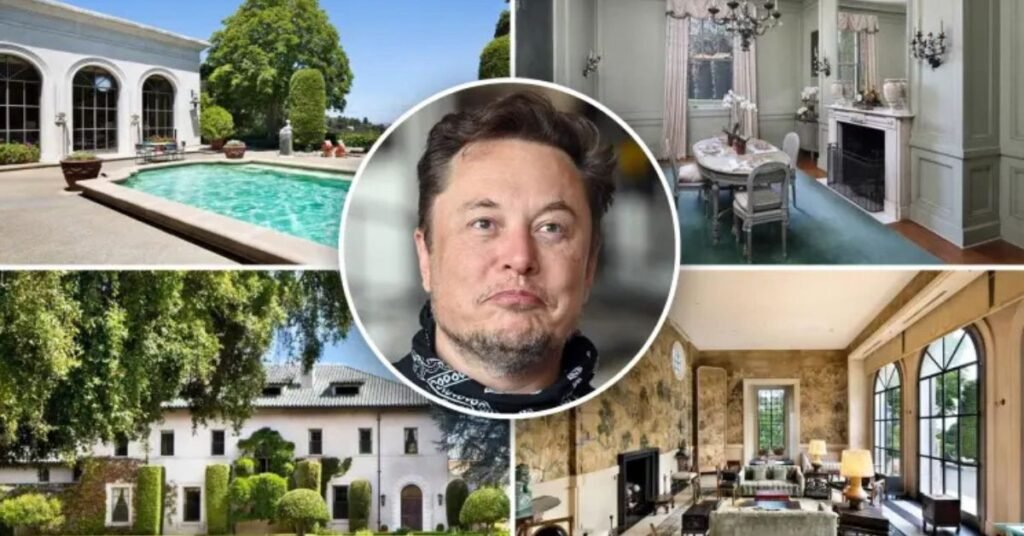
Elon Musk is known for rockets, electric cars, artificial intelligence, and bold business moves. But his real estate story is just as unusual. Unlike many billionaires who build larger and larger property portfolios, Musk publicly said he wanted to sell most of his physical possessions and “own no house.” Since then, his lifestyle has moved between luxury estates, modest homes, reported Texas compounds, and futuristic communities close to SpaceX.
For an architecture and interior design audience, the story of Musk homes is fascinating because it is not only about wealth. It is about contrast. On one side, there are grand Bel Air mansions with pools, libraries, theatres, and landscaped gardens. On the other, there is a compact Texas house near SpaceX operations, showing a radically minimal approach to living.
This blog explores the most luxurious and most discussed properties connected to Elon Musk, while also looking at what designers can learn from their architecture, interiors, privacy planning, spatial efficiency, and lifestyle storytelling.
Why Musk Homes Fascinate Architecture and Interior Design Readers?
The real estate connected to Elon Musk reflects a changing idea of luxury. Traditional luxury is usually linked to large rooms, expensive materials, private gardens, entertainment zones, and impressive views. Musk’s property story adds another layer: location, purpose, privacy, mobility, and proximity to work.
His former California mansions showed classic billionaire lifestyle design, while his Texas living choices suggest a more functional and mission-driven idea of space. For architects and interior designers, this makes the topic more interesting than a simple celebrity home tour.
The most talked-about Musk homes show that luxury can mean different things in different phases of life. Sometimes it means a grand estate. Sometimes it means a secure family compound. Sometimes it means living close to a rocket launch facility because work and ambition define the lifestyle.
1. The Former Bel Air Mansion: Classic Billionaire Luxury
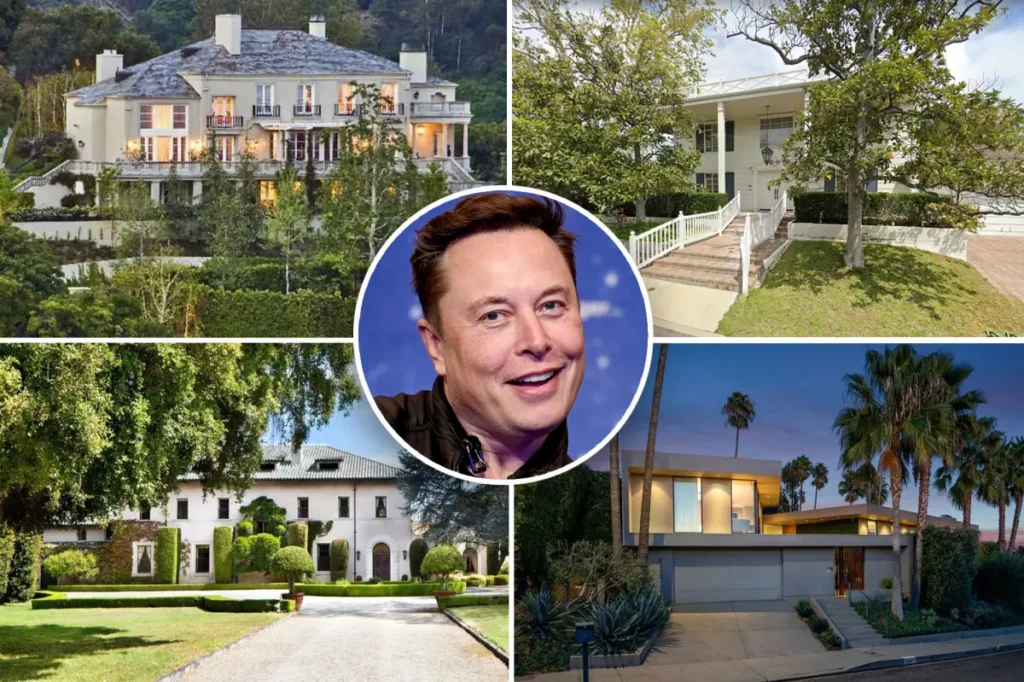
One of Elon Musk’s most famous former properties was his large Bel Air mansion in Los Angeles. This home represented traditional luxury at its finest, with generous indoor spaces, entertainment areas, a swimming pool, outdoor patios, landscaped gardens, and views across the Bel Air area.
From an architectural perspective, the property followed the language of high-end Los Angeles living. It focused on privacy, views, leisure, and indoor-outdoor movement. Large openings, terraces, gardens, and recreational zones made it suitable for both private living and social events.
For interior designers, this kind of property offers lessons in scale. A luxury mansion must not only look impressive; it must feel comfortable. Large rooms need careful zoning, warm materials, balanced lighting, and furniture that supports both grandeur and intimacy.
2. Gene Wilder’s Former Bel Air House: A Home with Emotional Value
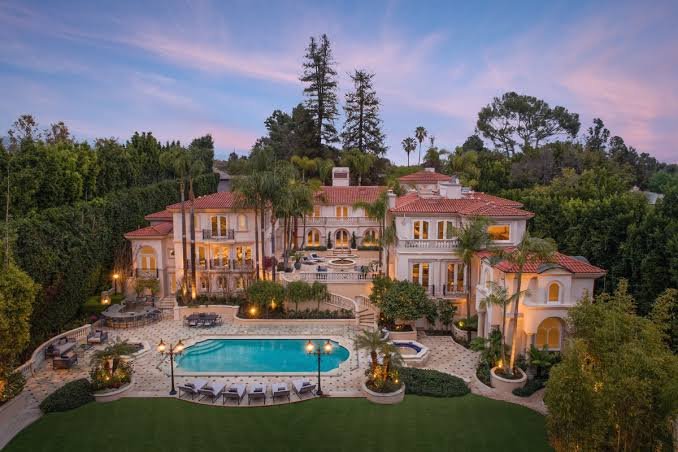
Another well-known property connected to Musk was the former home of actor Gene Wilder. Unlike a typical ultra-modern mansion, this house gained attention because of its cultural and emotional value. Musk reportedly wanted the property to retain its character and not lose its original soul.
This makes the property important from a design point of view. Heritage homes are not always about size or price. Their value often comes from memory, identity, proportion, and atmosphere. A house with history needs sensitive restoration rather than aggressive redesign.
For architects, this property highlights the importance of adaptive preservation. For interior designers, it shows why some spaces should be upgraded gently, keeping original character, warm textures, and emotional continuity intact.
3. The Hillsborough Estate: Grand Scale and Landscape Luxury
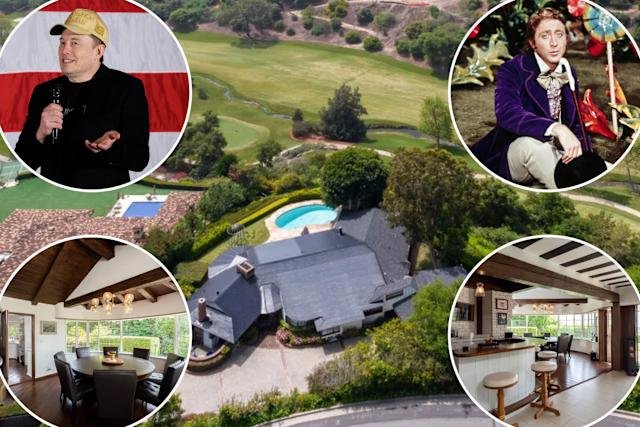
Musk was also connected to a large Hillsborough estate in Northern California. This type of estate represents a different kind of luxury from city mansions. Instead of focusing only on interiors, it depends heavily on land, privacy, gardens, long views, and a strong relationship with nature.
Estate design is about arrival experience. Driveways, gates, lawns, tree cover, courtyards, terraces, and outdoor gathering spaces all shape how the home is experienced before someone even enters the main building.
For luxury residential architecture, this is an important lesson. The landscape is not separate from the home. It is part of the design language. A well-planned estate uses greenery, topography, pathways, and outdoor rooms to create a complete lifestyle environment.
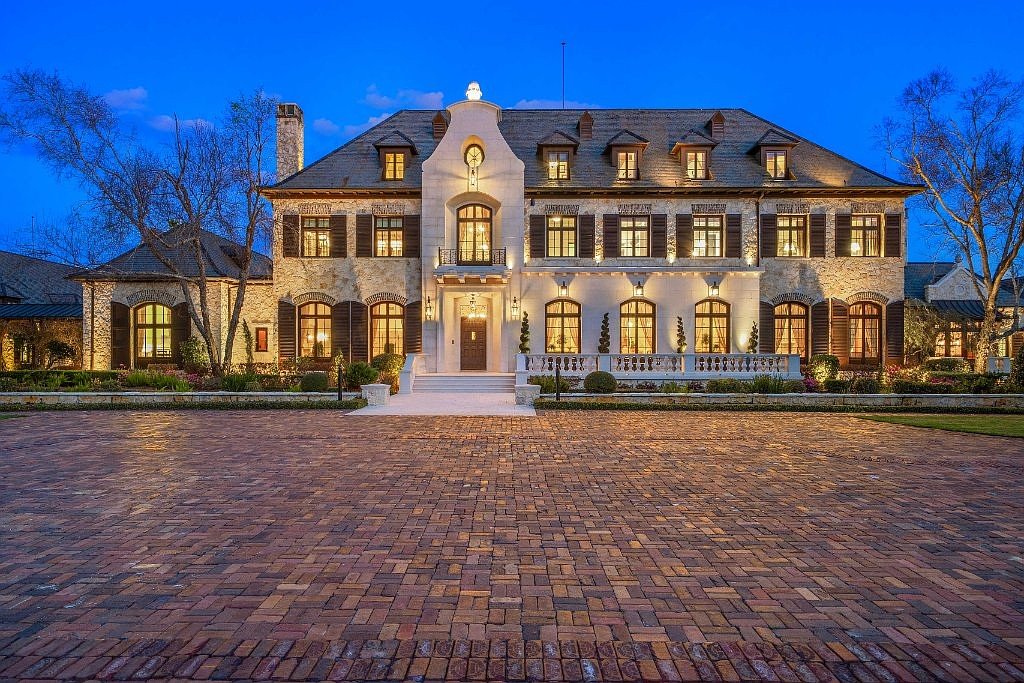
4. The Reported Austin Compound: Privacy, Family and Modern Planning
Recent reports have linked Musk to multiple Austin-area properties, including a large Tuscan-style villa and nearby homes. Musk has denied some claims around the compound narrative, so it is best understood as a reported and widely discussed real estate story rather than a confirmed public residence in every detail.
From an architecture and planning perspective, the idea of a multi-home compound is highly relevant. It reflects a growing luxury trend where privacy, family proximity, security, and flexible living are more important than one single oversized mansion.
A compound-style layout can include separate homes, shared gardens, private entries, guest zones, children’s areas, staff circulation, security planning, and outdoor spaces that connect different buildings. For high-profile clients, this arrangement can offer both independence and togetherness.
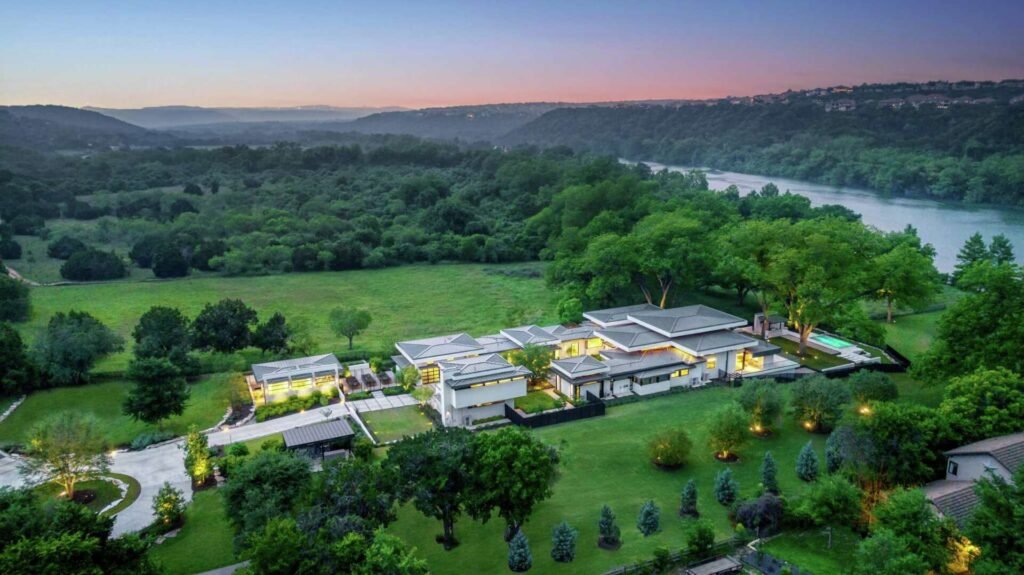
5. The Boca Chica House: Minimal Living Near SpaceX
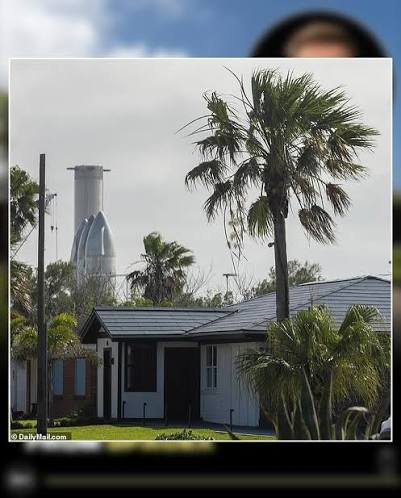
One of the most surprising properties associated with Elon Musk is the modest Boca Chica home near SpaceX’s Starbase area in Texas. Musk has described living in a small house close to SpaceX operations, which stands in sharp contrast to his former luxury real estate portfolio.
From an interior design perspective, compact living requires discipline. Every square foot must have a purpose. Storage, furniture scale, lighting, circulation, and multifunctional zones become more important than decorative excess. me represents a different kind of design value. It suggests that convenience, location, and function can matter more than size. For modern homeowners, especially those interested in minimalism, it shows how a smaller home can still support a powerful lifestyle when planned thoughtfully.
For readers interested in the compact living side of Elon Musk’s real estate story, this detailed feature on Elon Musk’s $50K tiny house explains how a small home can still reflect modern design, efficiency, and minimalist luxury.
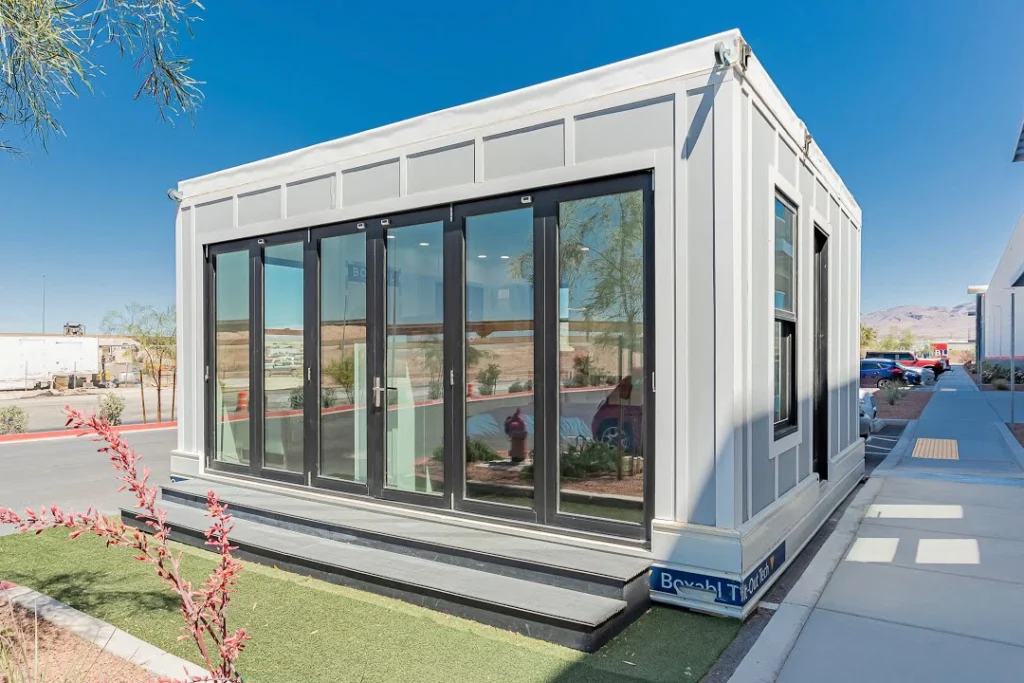
6. The Boxable Tiny Home Story: Future-Ready Compact Design
Musk has also been associated with the idea of a compact prefab or tiny home near Boca Chica, often discussed in connection with Boxabl-style modular living. Whether used as a guest space or part of the broader tiny-home conversation, this idea fits strongly into today’s architectural trends.
Prefab homes are interesting because they respond to speed, cost, mobility, and sustainability. They can be built faster than traditional homes and designed with efficient layouts, controlled materials, and repeatable construction systems.
For interior designers, tiny homes are a masterclass in space optimization. Foldable furniture, hidden storage, clean surfaces, convertible rooms, and natural light become essential. The design challenge is to make a small space feel open, calm, and practical.
7. Starbase Housing: The Future of Work-Live Communities
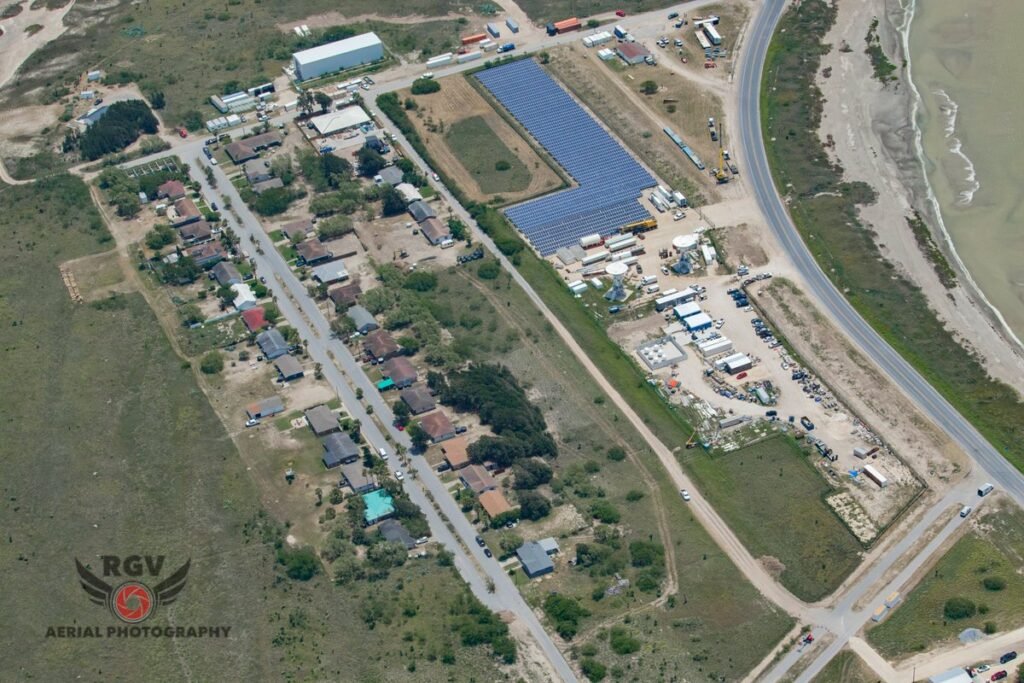
The growth of SpaceX’s Starbase area in South Texas has created a new kind of architectural discussion. Around the rocket facilities, housing, trailers, employee spaces, and developing community zones are becoming part of a larger work-live environment.
Musk homes is not a conventional luxury home story, but it is highly relevant to future architecture. Starbase reflects the idea that housing can develop around a mission, a workplace, and a technological ecosystem. It also raises important questions about community impact, safety, infrastructure, and environmental responsibility.
For architects and urban planners, the lesson is clear. Future communities must balance innovation with human comfort. Housing near advanced industrial or technological zones needs strong planning, acoustic control, climate response, infrastructure, public space, and long-term social thinking.
Interior Design Lessons from Musk Homes
The design story behind these musk homes offers several useful lessons for modern interiors.
First, luxury is no longer only about size. A small home near a workplace can be more meaningful than a mansion far away from daily priorities. Second, privacy has become a core design requirement for high-profile homeowners. Third, adaptive reuse and emotional value can be just as important as modern upgrades.
Designers can also learn the importance of flexibility. Whether it is a large estate, a family compound, or a compact home, the space must match the user’s lifestyle. The best interiors are not just beautiful; they are deeply practical.
Architecture Lessons from Musk Homes
The architecture connected to Musk homes shows different versions of ambition. Bel Air represents classic wealth and leisure. Hillsborough represents land and privacy. Austin suggests compound planning. Boca Chica represents mission-based minimal living. Starbase points toward futuristic community development.
For architects, this variety proves that a home should be designed around purpose. A residence can be a retreat, a family network, a work base, a heritage asset, or a compact command centre. The form should follow the lifestyle.
What Makes Musk Homes Appealing to Readers?
Readers are drawn to Elon Musk’s homes because the story is full of contrast. He is one of the world’s most influential billionaires and now world’s first trillionaire, yet he has publicly promoted a minimalist lifestyle. He sold many luxury properties, yet continues to be linked with high-value real estate reports. He works on Mars colonisation, yet his most discussed current living setup is tied to a small Texas town near a rocket site.
This contrast makes the story more engaging than a normal celebrity home article. It combines wealth, design, technology, family, privacy, and futuristic living.
Final Thoughts on Musk Homes and Modern Luxury
The most luxurious homes connected to Elon Musk are not only about expensive real estate. Musk homes are a changing relationship between wealth and space. His former Bel Air mansion showed traditional luxury, while the Gene Wilder house highlighted emotional preservation. The Hillsborough estate reflected landscape-driven privacy, and the reported Austin properties introduced the idea of compound living.
At the same time, Boca Chica and Starbase show a completely different design direction: compact, functional, work-focused, and futuristic. For architecture and interior design readers, this makes the story of Musk homes especially powerful.
In the end, the biggest lesson is that luxury is becoming more personal. It may come from scale, privacy, heritage, technology, location, or simplicity. Elon Musk’s real estate journey proves that a home is not just a status symbol. It is a reflection of ambition, lifestyle, priorities, and the future a person is trying to build.