
There are design festivals that are attended for visibility, and there are design festivals that are followed because they begin to say something larger about the direction of the industry. FOAID 2026-27 belongs to the second category. It does not feel important only because it is well known. It feels important because it arrives at a time when architecture and interior design in India are asking deeper questions about relevance, climate, materiality, experience, and identity. What makes this upcoming edition especially compelling is that it is not beginning from scratch. It is building on the energy, scale, and professional weight that FOAID carried into 2025. The official FOAID website lists the 2026-27 cycle as New Delhi on 27–28 November 2026 at NSIC Grounds, Okhla, and Mumbai on 27–28 January 2027 at Jio World Convention Centre. FOAID also describes itself as a leading national platform for architecture and interior design, now moving into its 11th year of design celebration. For readers who want to track the event directly, the most natural outbound link to include in your blog is the FOAID official website. The reason this matters is simple. A festival becomes powerful when it is not just showcasing work, but also capturing a mood. In recent years, the mood of architecture has changed. The industry is no longer impressed by display alone. It wants buildings that perform better, interiors that feel more human, materials that age with dignity, and ideas that go beyond presentation. A platform like FOAID becomes relevant in such a …
There are design festivals that are attended for visibility, and there are design festivals that are followed because they begin to say something larger about the direction of the industry. FOAID 2026-27 belongs to the second category. It does not feel important only because it is well known. It feels important because it arrives at a time when architecture and interior design in India are asking deeper questions about relevance, climate, materiality, experience, and identity.
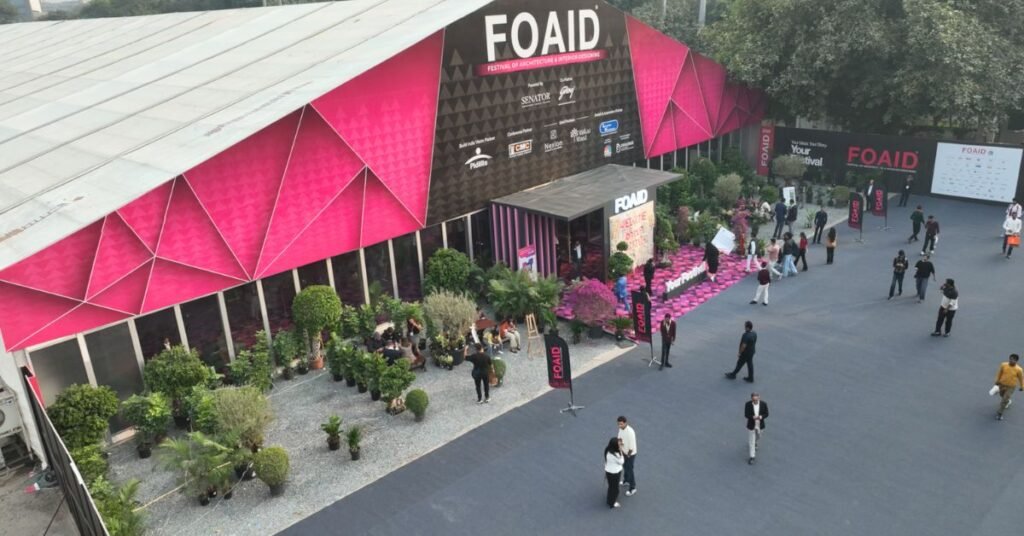
What makes this upcoming edition especially compelling is that it is not beginning from scratch. It is building on the energy, scale, and professional weight that FOAID carried into 2025. The official FOAID website lists the 2026-27 cycle as New Delhi on 27–28 November 2026 at NSIC Grounds, Okhla, and Mumbai on 27–28 January 2027 at Jio World Convention Centre. FOAID also describes itself as a leading national platform for architecture and interior design, now moving into its 11th year of design celebration.
For readers who want to track the event directly, the most natural outbound link to include in your blog is the FOAID official website.
The reason this matters is simple. A festival becomes powerful when it is not just showcasing work, but also capturing a mood. In recent years, the mood of architecture has changed. The industry is no longer impressed by display alone. It wants buildings that perform better, interiors that feel more human, materials that age with dignity, and ideas that go beyond presentation. A platform like FOAID becomes relevant in such a moment because it gathers professionals, students, brands, researchers, and design enthusiasts into one shared conversation.
Why the 2025 FOAID edition matters before we talk about 2026-27
If you want your 2026-27 blog to feel more convincing, it helps to show readers that the excitement is grounded in what FOAID already achieved in 2025. FOAID’s official contact page lists the 2025 Delhi edition on 21–22 November at NSIC Okhla, New Delhi, and the 2025 Mumbai edition on 19–20 December at Jio World Convention Center, Mumbai. That gives your article a strong continuity line: this is not a speculative event, but a growing design platform with a clear annual rhythm.
Even more useful is the official FOAID blog’s recap of the Delhi momentum that carried into Mumbai. According to that FOAID blog post, the Delhi edition drew more than 6,500 visitors, featured 350+ iconic projects, brought together 100+ speakers, and included 150+ showcases. The same post frames the festival as a live environment of dialogue, experimentation, collaboration, and exchange between established practitioners and young designers.
That is exactly the kind of factual backbone your blog needs.
Because once a reader sees that FOAID 2025 already had that level of participation and visibility, FOAID 2026-27 begins to feel less like another event announcement and more like the next chapter of a design movement that is steadily expanding its cultural and professional weight.
What made FOAID feel like one of the best design events in 2025
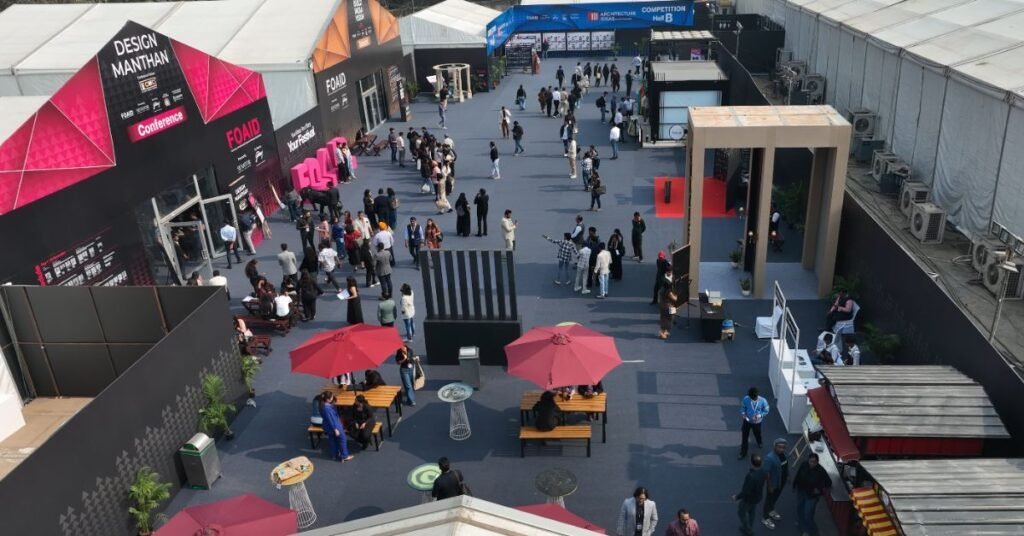
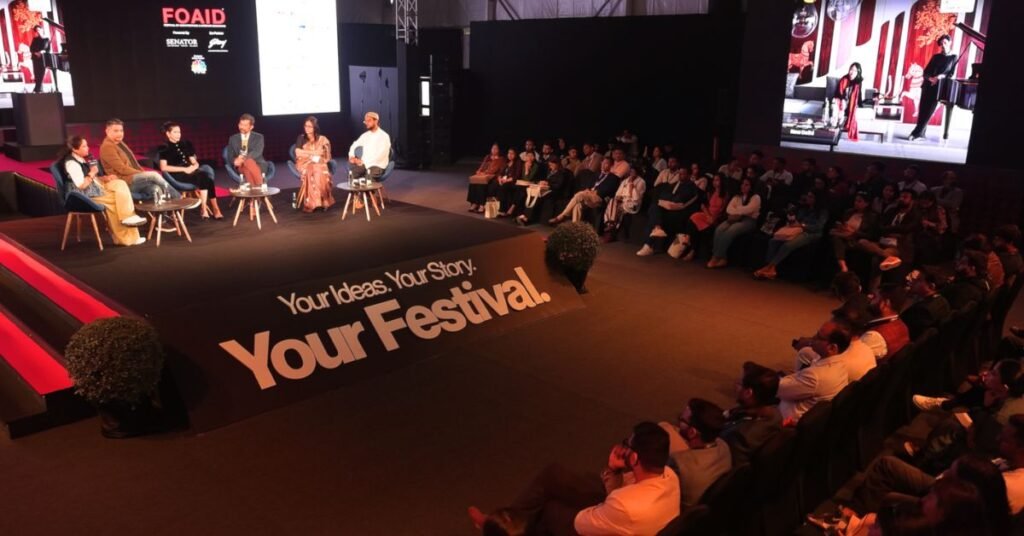
A design event becomes memorable when it manages to combine scale with substance. FOAID’s own festival pages make that combination clear. The official festival description highlights the Design Arena as a large-format display of 200+ inspirational works across built, unbuilt, and ongoing projects, spread over 30,000 sq. ft. The same page describes Design Manthan as a conference with over 150 renowned national and international speakers across 20 dynamic sessions, built around talks, panel discussions, debates, and design dialogue.
Those details matter because they show why FOAID is often spoken of not just as an exhibition, but as a complete design ecosystem. It is one thing to have products on display. It is another thing to create a setting where products, ideas, architectural language, competition platforms, and professional exchange all coexist. That layered structure is what gives FOAID an edge over a typical expo format.
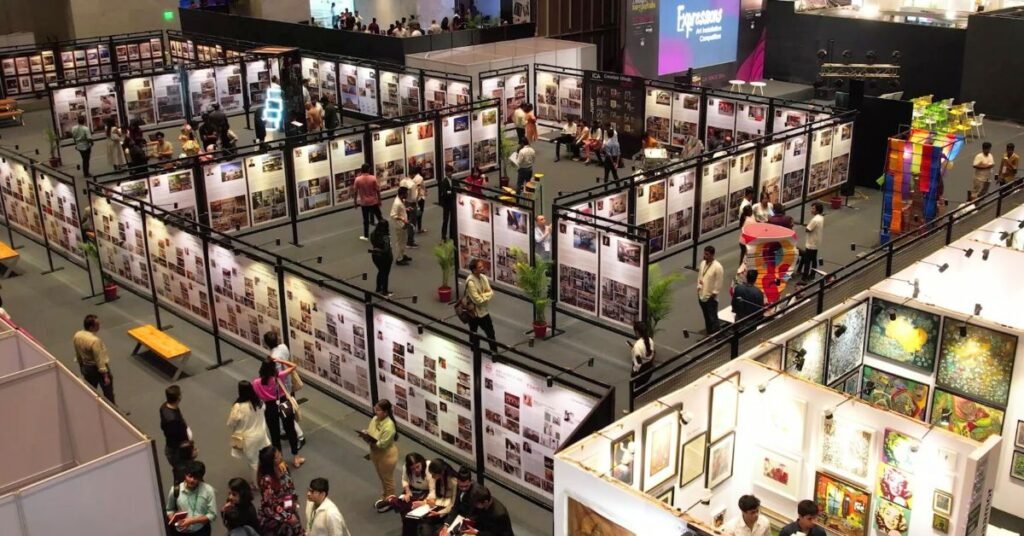
In 2025, that edge became more visible. The official FOAID competition ecosystem also remained active through platforms like VOX Architecture Ideas, ICA Creative Minds Next, and Expressions, giving both professionals and students a more public design stage. FOAID’s site describes ICA Creative Minds Next as a competition with over 80 jury members and 1,500 participants, while the Expressions page lists the 2025 student installation theme as “Untold Dimensions (Stories from the unseen)”.
That kind of structure gives a festival legitimacy. It says the event is not only rewarding visibility. It is also rewarding thinking.
Why FOAID 2026-27 could be even bigger in meaning
The strongest way to position FOAID 2026-27 is not to say it will simply be bigger. It is better to say it could be more meaningful.
Architecture today is being measured differently. The profession is being pushed to look beyond the image and return to atmosphere, climate, orientation, wellness, tactility, and long-term use. Interiors, too, are moving away from mere decoration toward emotional experience, crafted restraint, and material intelligence. In that context, the best event is not the one that is the loudest. It is the one that reflects the sharpest change in design values.
This is why FOAID 2026-27 has such strong editorial potential. After a 2025 cycle that already demonstrated strong attendance, broad showcases, and serious discourse, the next edition can be framed as a more mature reading of where Indian design is heading. It can become the place where the industry tests its next set of priorities: sustainable material choices, climate-responsive architecture, experiential lighting, adaptive interiors, and a more thoughtful balance between luxury and restraint.
That balance is worth emphasizing in your blog. Readers of an architectural platform are not looking only for information. They are looking for interpretation. They want to know why something matters. In this case, it matters because FOAID sits at the meeting point of product innovation, design culture, architectural debate, and emerging talent.
The real design vision readers should watch for
If I were shaping this as an architect’s view, I would say that the real strength of FOAID 2026-27 may lie in one word: vision.
Not vision in the abstract motivational sense.
Vision in the architectural sense.
The ability to see what kind of spaces the next decade will ask for. The discipline to understand that beauty without performance is fragile, and performance without atmosphere is forgettable. The intelligence to know that a good interior is not assembled through trends, but composed through proportion, light, texture, and use.
This is where FOAID becomes especially relevant. Its structure allows multiple scales of design thinking to appear in one place. A visitor can encounter a product detail, a material conversation, a competition installation, a speaker session, and a built project display in the same wider ecosystem. That kind of proximity creates insight. It helps people understand not only what is fashionable, but what is actually changing.
And right now, what is changing is substantial. Designers are becoming more selective. Clients are asking better questions. The market is slowly learning that permanence, comfort, sustainability, and identity cannot be faked through polish alone. A festival that can hold those conversations publicly begins to matter far beyond its dates.
Why architects, interior designers, and students should pay attention
For architects and interior designers, FOAID 2026-27 is worth following because it compresses a wide reading of the industry into one platform. Instead of trying to understand the future through scattered posts and isolated launches, professionals get to read a larger pattern. What kinds of projects are being foregrounded? What kinds of material stories are being repeated? What kind of design language is becoming more persuasive?
For students and emerging practices, the value is even greater. FOAID’s competitions and winners’ platforms show that the event is designed not only around famous names, but also around visibility for new voices. The official winners pages for 2025 already showcase named practices and individuals across conceptual and ongoing categories, reinforcing the idea that FOAID is part celebration and part professional gateway.
That matters because architecture is not only built through buildings. It is also built through recognition, criticism, and cultural conversation. Young designers grow faster when they see how ideas are being presented, discussed, and judged in a professional environment.
[Image required here — use an image of competition displays, student installations, jury reviews, or emerging designers presenting work]
Delhi and Mumbai make the platform feel larger than a single event
Another reason this works so well as a blog angle is the dual-city structure. Delhi and Mumbai do not simply duplicate each other. They extend the event’s cultural reach. One city often carries institutional depth and an intense dialogue with history, while the other brings market velocity, hospitality energy, and a sharper interface with contemporary design business. Together, they allow FOAID to feel national rather than local.
That multi-city continuity also helps your blog feel more substantial. It lets you position FOAID 2026-27 not as a one-weekend burst, but as an ongoing design conversation unfolding across two major centres. The official site’s scheduling of Delhi in late November 2026 and Mumbai in late January 2027 reinforces that longer arc.
Final thoughts
So yes, if you want a stronger title and a stronger editorial stance, this is the direction I would take: FOAID 2026-27 is not just another upcoming event. It could genuinely be India’s best architecture and interior design event yet — because 2025 already proved the platform has scale, depth, and professional momentum.
What makes the upcoming edition exciting is not only who may attend, but what may become visible through it: more serious conversations, sharper material intelligence, more thoughtful interiors, stronger young talent, and a wider design vision that feels aligned with the future rather than trapped in repetition.
That is the kind of line your readers will respond to.
Not because it sounds promotional.
Because it sounds earned.