

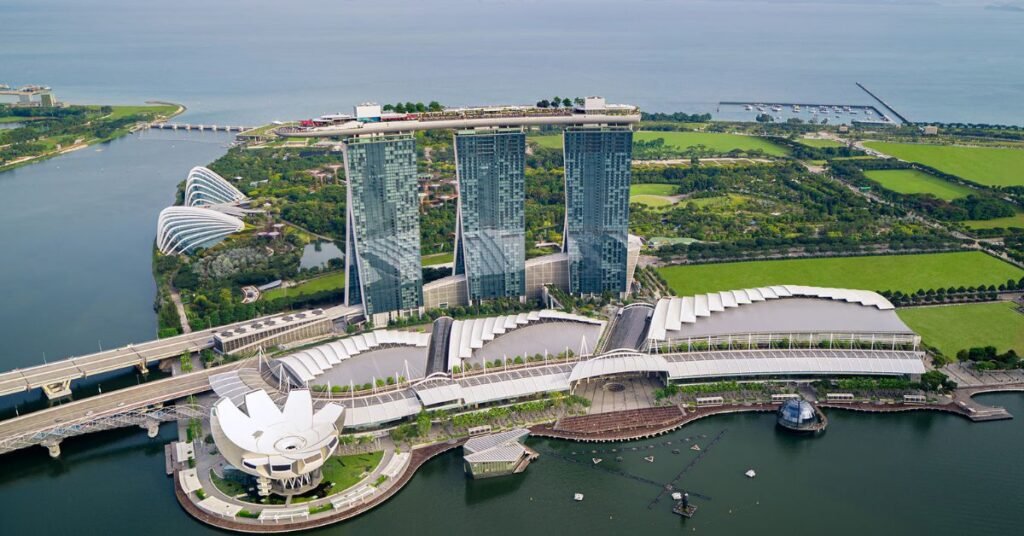
Marina Bay Sands rises dramatically above the city with three tall towers connected by the Sands SkyPark. This creates a powerful visual identity that can be recognised instantly in photographs, films, postcards, and travel campaigns.
Singapore is known for clean streets, futuristic buildings, green spaces, luxury hotels, and world-class urban planning. But if one place captures the city’s architectural ambition most powerfully, it is Marina Bay.
This waterfront district is not just a tourist attraction. It is a carefully designed urban experience where architecture, landscape, hospitality, retail, public space, and skyline design come together. For travellers, it offers unforgettable views. For architects and designers, it offers a lesson in how a city can use design to create identity.
At the heart of this destination stands Marina Bay Sands, one of the most recognisable structures in the world. Its three towers, sky-high deck, infinity pool, waterfront setting, and surrounding attractions have turned it into a global symbol of Singapore’s modern design vision.
Why Marina Bay Is a Must-See Architectural Landmark?
This district is more than a beautiful waterfront. It is a planned urban zone that shows how architecture can shape tourism, lifestyle, and public experience. The area connects hotels, museums, gardens, promenades, retail spaces, cultural attractions, and viewing points into one continuous design journey.
The biggest reason this place feels iconic is its skyline. Marina Bay Sands rises dramatically above the city with three tall towers connected by the Sands SkyPark. This creates a powerful visual identity that can be recognised instantly in photographs, films, postcards, and travel campaigns.
For architecture lovers, the landmark proves that a building can become more than a structure. It can become a symbol of a country’s ambition, creativity, and future-ready planning.
The Design Icon of Singapore
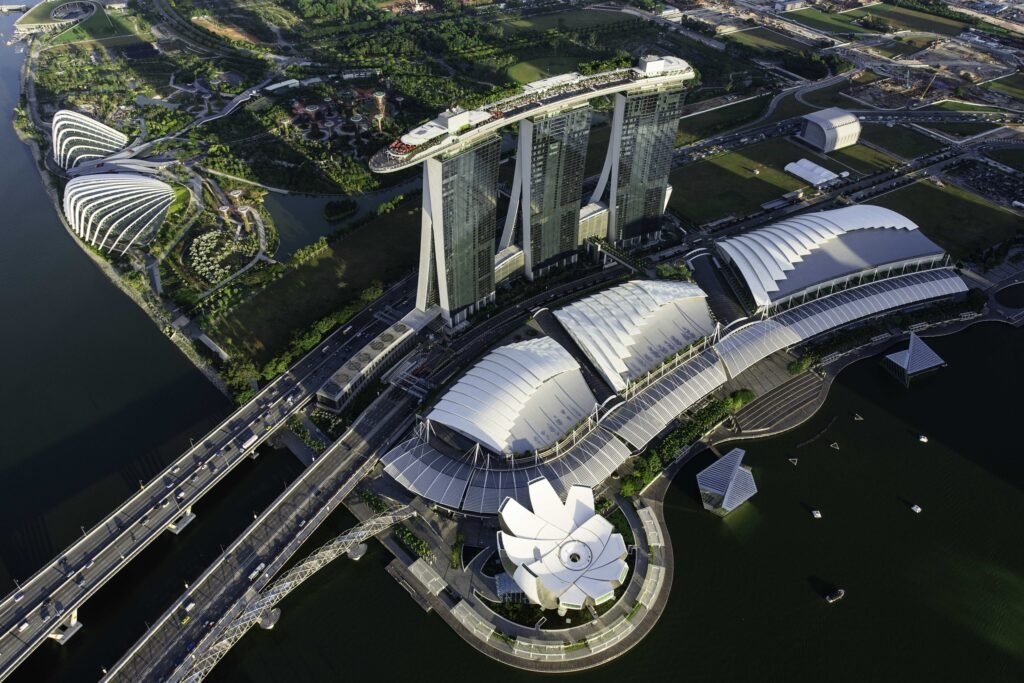
Marina Bay Sands was designed by architect Moshe Safdie and is one of the boldest examples of integrated resort architecture. Its form is both dramatic and functional. The three towers support a large rooftop SkyPark that stretches across the top like a ship floating above the skyline.
This design gives the building its unforgettable silhouette. From a distance, it feels sculptural. From inside, it becomes a layered experience of hotel rooms, observation decks, restaurants, shops, public circulation, and entertainment zones.
The project is important because it combines architecture with tourism at a massive scale. It does not only provide accommodation. It creates a destination where people can stay, shop, dine, attend events, enjoy views, and experience Singapore from above.

Marina Bay and the Power of Urban Planning
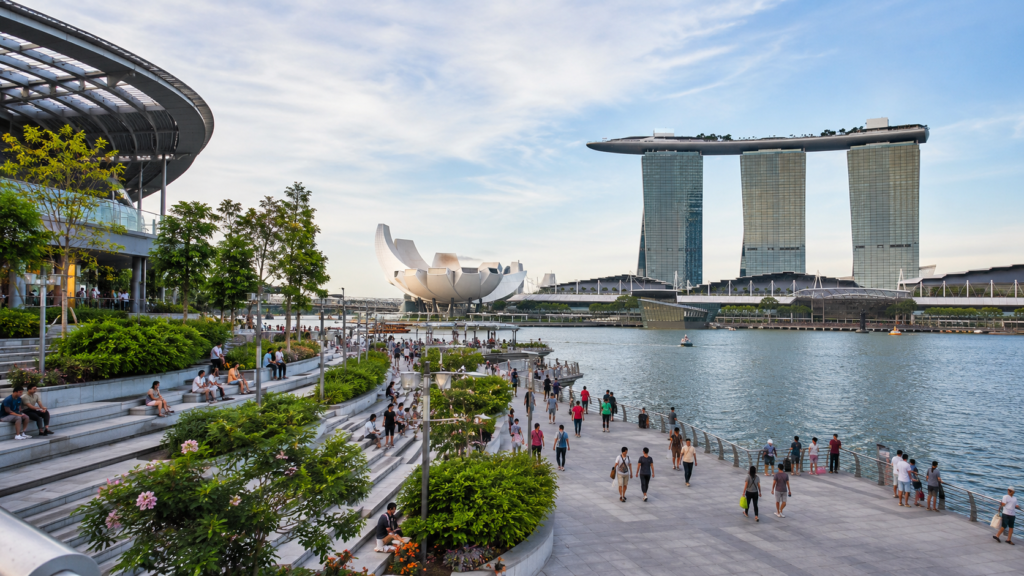
A major reason this area works so well is its strong urban planning. The waterfront is designed for movement, views, and public engagement. Visitors can walk along promenades, pause near the water, experience night shows, visit nearby attractions, and enjoy open views of the skyline.
This is a valuable lesson for architects and urban designers. A landmark becomes more powerful when it is supported by good public space. The building may attract attention, but the surrounding walkways, plazas, gardens, transport links, and viewing areas make the experience complete.
For modern cities, this shows how tourism and public life can work together. When architecture is planned with people in mind, it becomes memorable, useful, and emotionally engaging.
Interior and Hospitality Design Lessons
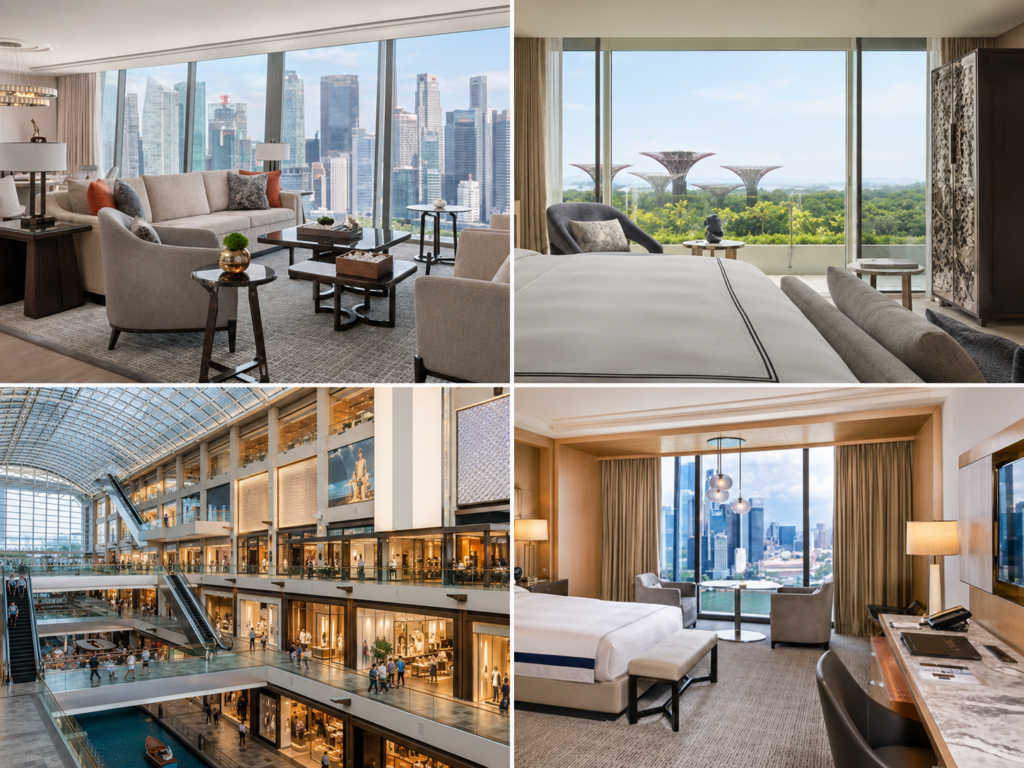
Inside Marina Bay Sands, the design experience continues through luxury interiors, large atriums, refined hotel spaces, premium retail areas, restaurants, and entertainment venues. The interiors are planned to handle large numbers of visitors while still creating a sense of comfort and exclusivity.
For interior designers, this is an important balance. Large public interiors must feel impressive, but they must also be easy to navigate. Lighting, signage, floor finishes, ceiling height, furniture placement, and circulation routes all influence how visitors move and feel.
The hospitality spaces also show how design can create a premium experience through material choices, controlled lighting, panoramic views, and carefully planned customer journeys.
Marina Bay SkyPark: Architecture in the Sky
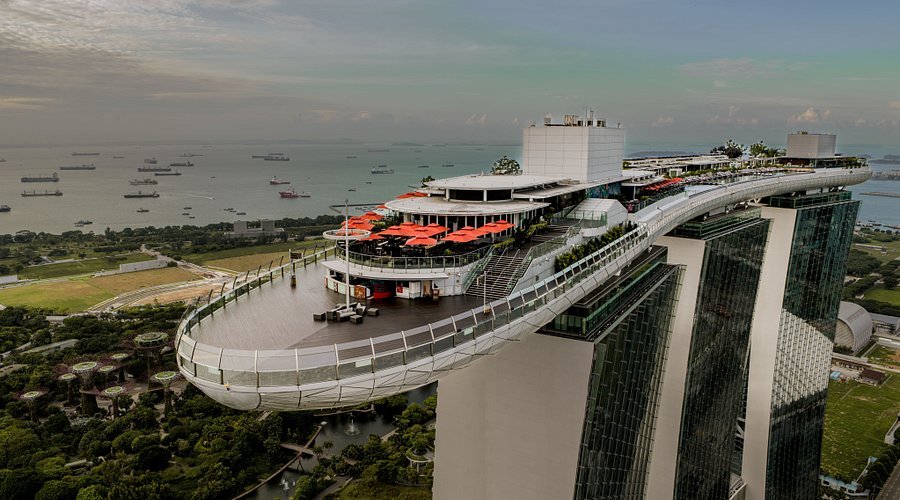
The Sands SkyPark is one of the most memorable parts of the landmark. Positioned high above the city, it gives visitors a dramatic view of Singapore’s skyline, waterfront, Gardens by the Bay, and the Singapore Strait.
From an architectural point of view, the SkyPark is fascinating because it changes how people experience height. It is not only a viewing platform. It feels like an elevated public realm, with open-air spaces, greenery, dining, observation areas, and the famous rooftop pool for hotel guests.
This design idea shows how rooftops can become active destinations. Instead of being unused technical zones, they can become gardens, social spaces, viewing decks, and lifestyle experiences.
Gardens, Water and Skyline Views
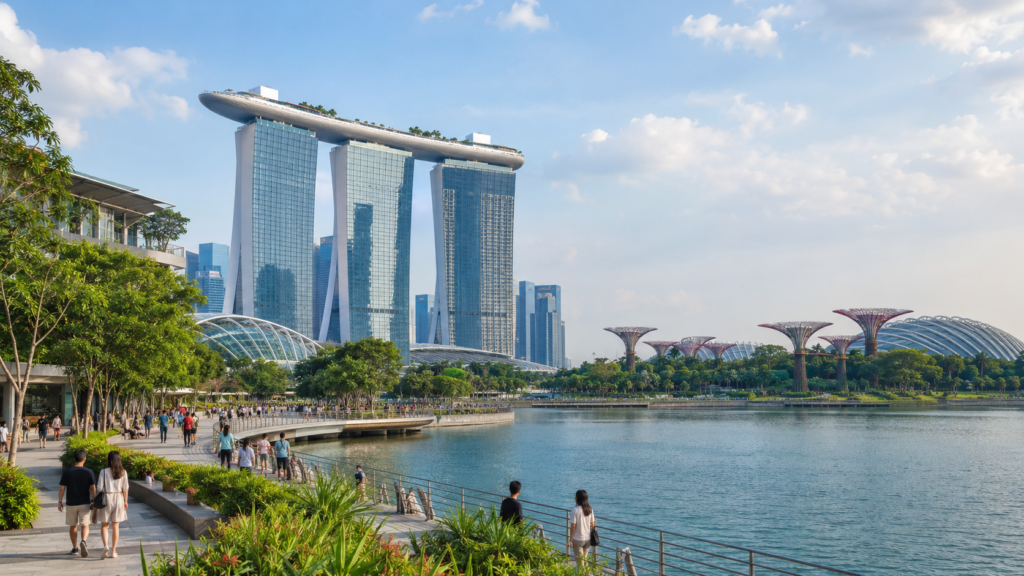
One of the most interesting things about the district is the relationship between built form and nature. The area does not rely only on glass towers and concrete surfaces. It combines architecture with water, greenery, gardens, and open public areas.
This reflects Singapore’s broader identity as a city that values greenery within dense urban spaces. The nearby Gardens by the Bay adds another layer to the experience through futuristic garden structures, conservatories, and landscape design. To understand how green public spaces can reshape modern cities, readers can also explore this guide on urban parks that transform city living, which features Gardens by the Bay as a strong example of futuristic landscape and eco-urban design.
For architects, this combination of water, skyline, and greenery is a strong reminder that iconic places are not created by buildings alone. They are created by the atmosphere around them.
What Architects Can Learn from Marina Bay?
Architects can learn several lessons from this landmark. First, a strong silhouette matters. The shape of Marina Bay Sands is simple enough to remember, but bold enough to become iconic.
Second, mixed-use planning can make a building more active throughout the day. Hotel, retail, dining, entertainment, observation, and event spaces bring different kinds of visitors into the same destination.
Third, the connection between the building and the city is essential. A landmark should not feel isolated. It should connect with public spaces, transport, views, and surrounding attractions.
What Interior Designers Can Learn from Marina Bay?
Interior designers can study this destination for its hospitality planning, lighting, material control, spatial flow, and luxury experience. The interiors must serve tourists, hotel guests, shoppers, diners, and event visitors, which makes planning highly important.
Good interiors in such a large destination require clarity. Visitors should know where to go, where to pause, where to look, and how to move comfortably. This is achieved through zoning, lighting, signage, furniture, and visual hierarchy.
The design also proves that luxury is not only about expensive materials. It is about how space makes people feel.
Best Experiences for Architecture Lovers
Visitors interested in architecture and design should explore the area slowly rather than treating it as a quick photo stop. The best experiences include walking along the waterfront promenade, viewing the skyline at sunset, visiting the SkyPark Observation Deck, exploring the ArtScience Museum, and experiencing Gardens by the Bay after dark.
Each of these experiences reveals a different design layer. The promenade shows urban planning. The hotel shows landmark architecture. The museum shows sculptural form. The gardens show landscape innovation. The skyline shows how buildings can create a city identity.
Project 101: From Singapore’s Design Journey to Jakarta and Bali
The recently completed Project 101 Singapore journey gave participants a chance to experience the city through a designer’s eye. Instead of exploring Singapore like regular tourists, the journey allowed them to observe how public spaces are planned, how greenery blends with dense urban environments, how hospitality spaces shape guest experience, and how iconic landmarks create a strong city identity.
Now, the design journey moves forward to Bali and Jakarta. This upcoming experience opens a new chapter for architects and designers who want to explore a different side of Southeast Asian design. Bali offers lessons in nature-led architecture, tropical resorts, cultural spaces, craft, courtyards, and climate-responsive living. Jakarta brings a contrasting urban energy through hospitality projects, commercial spaces, modern towers, creative studios, and fast-changing city development.
Together, Bali and Jakarta create a powerful design contrast: one rooted in landscape, tradition, and slow living, and the other shaped by urban growth, density, and contemporary design ambition.
For readers who missed the Singapore journey, this is the right time to become part of the next Project 101 experience. It is an opportunity to travel beyond ordinary tourism, connect with like-minded design professionals, and return with ideas that can influence future architecture and interior projects.
Interested architects, interior designers, studio founders, and creative professionals can register their interest for the upcoming Bali & Jakarta journey and become part of a curated community of design explorers.
Final Thoughts on Marina Bay and Singapore’s Design Identity
Marina Bay is not just Singapore’s most iconic tourist place. It is a design statement. It shows how architecture, interiors, landscape, hospitality, entertainment, and urban planning can come together to create a destination that feels both futuristic and human.
For architects, it is a lesson in landmark design and city-making. For interior designers, it is a lesson in luxury experience, circulation, atmosphere, and emotional impact. For travellers, it is simply one of the most unforgettable places to experience Singapore.
In the end, this destination proves that great architecture does more than fill a skyline. It creates memory, movement, identity, and a lasting connection between people and place.