

The Sydney Opera House is one of the world’s most recognisable architectural landmarks. This blog explores its design journey, iconic shell structure, harbour setting, interior experience, cultural value, and the lessons architects and interior designers can learn from its timeless design.
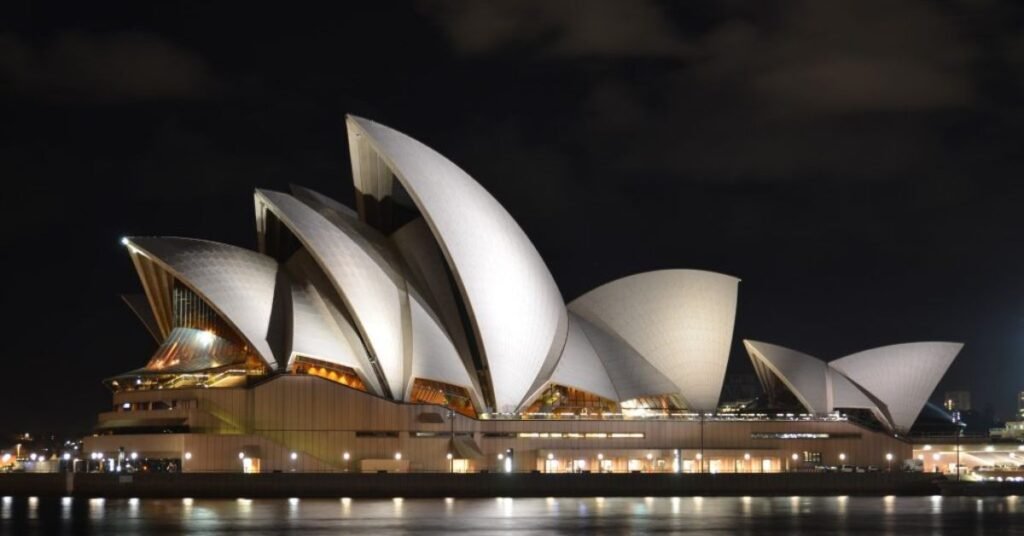
Few buildings in the world are as instantly recognisable as the Sydney Opera House. Set on Bennelong Point beside Sydney Harbour, this landmark is not just a performing arts venue. It is a powerful symbol of Australia, modern architecture, structural innovation, and cultural identity.
Designed by Danish architect Jørn Utzon, the opera building changed how people looked at public architecture. Its sculptural shells, waterfront setting, broad platforms, and dramatic relationship with sky and water turned it into more than a building. It became a global image of creativity.
For an architectural and interior design website, this landmark is important because it proves that great design is not only about function. It is about emotion, context, movement, light, material, engineering, and public memory.

Why Opera Architecture Inspires the World?
The Sydney landmark continues to inspire architects because it broke away from the ordinary design language of its time. Many modern buildings in the mid-20th century followed strict box-like forms, but Utzon’s vision was sculptural, expressive, and deeply connected to its harbour setting.
The building appears different from every angle. From the water, it feels like a group of sails. From the city, it becomes a strong civic monument. From close range, the tiled shells, podium steps, glass walls, and concrete forms reveal a more detailed architectural story.
This is why the building remains a strong design reference. It shows that architecture can become a city’s identity when form, location, structure, and cultural purpose come together.
The Design Story Behind the Sydney Landmark
The idea for a major performing arts centre in Sydney grew during the 1950s. An international competition was launched, and in 1957 Jørn Utzon’s design was selected from hundreds of entries. His proposal was bold, poetic, and unlike conventional performance buildings of the time.
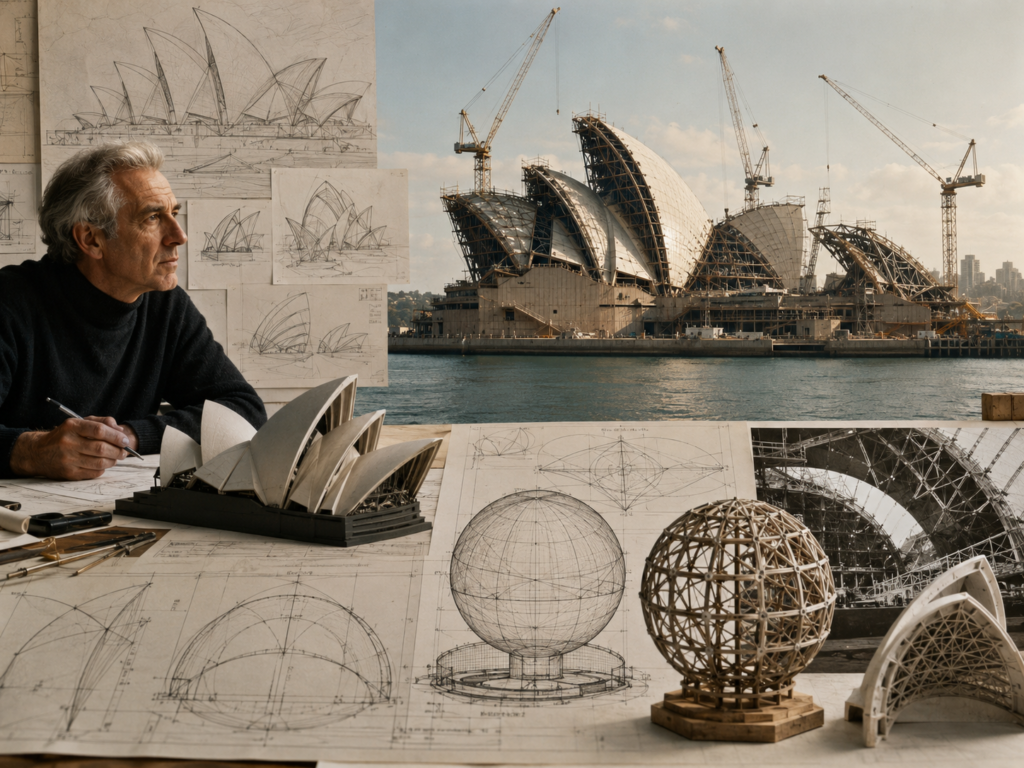
Construction began in 1959, but the project faced major technical challenges. The famous roof shells were extremely difficult to build because their geometry was far ahead of standard construction methods. The breakthrough came through the spherical solution, where the shell forms were derived from the surface of a sphere.
This solution allowed the roof geometry to become more buildable while keeping the sculptural power of the original design. For architects, this remains one of the most important lessons from the project: innovation often requires patience, experimentation, engineering support, and design courage.
The Sydney Opera House is also a powerful example of architects and engineers collaboration, showing how bold design ideas often need structural innovation, technical problem-solving, and teamwork to become real architectural landmarks.
Opera Form: Shells, Structure and Skyline Identity
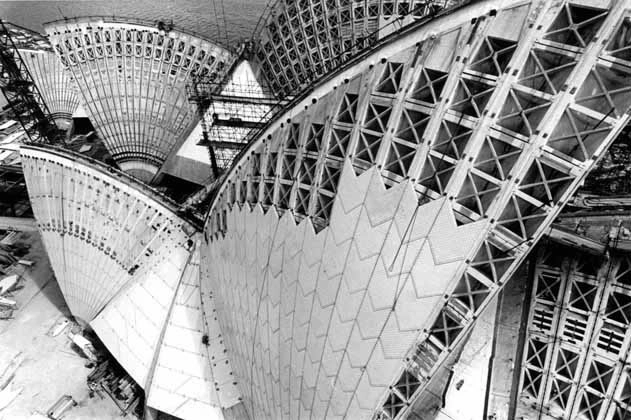
The most iconic feature of the opera building is its series of interlocking shell forms. These shells do not simply cover the performance halls. They create the entire visual identity of the project.
Their white tiled surfaces reflect sunlight during the day and glow beautifully against the sky. The forms also respond to the harbour, creating an image that feels connected to boats, sails, waves, and movement.
From a design point of view, the shells are powerful because they are both structural and symbolic. They solve a building problem while also creating a landmark image. This balance between engineering and imagination is one reason the project continues to be studied across the world.
Harbour Setting and Urban Design Impact
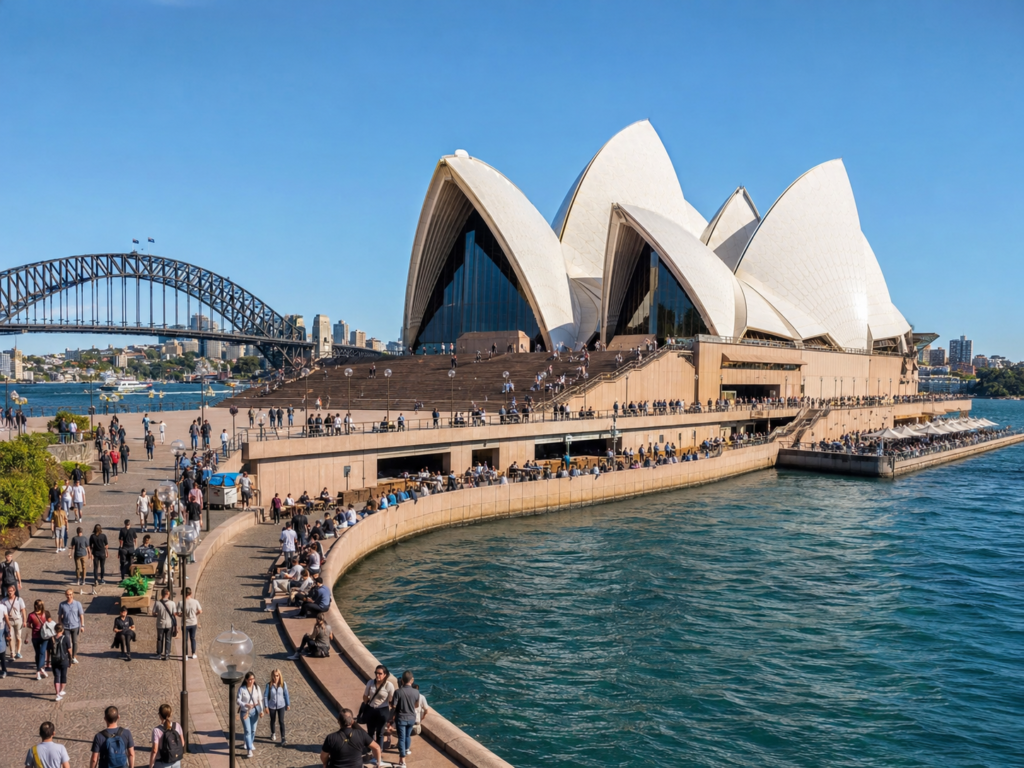
The location of the opera building is one of its greatest strengths. Bennelong Point gives the structure open visibility from the harbour, city, bridge, and surrounding public areas. The site allows the building to be seen as a sculpture in the landscape rather than just another urban block.
The broad podium, steps, terraces, forecourt, and surrounding walkways make the building part of public life. Visitors do not only enter it for performances. They walk around it, photograph it, gather near it, and experience it as part of Sydney’s daily rhythm.
For urban designers, this is an important lesson. A landmark becomes stronger when its surroundings support public movement, gathering, views, and civic activity.
Interior Design Lessons from the Sydney Landmark
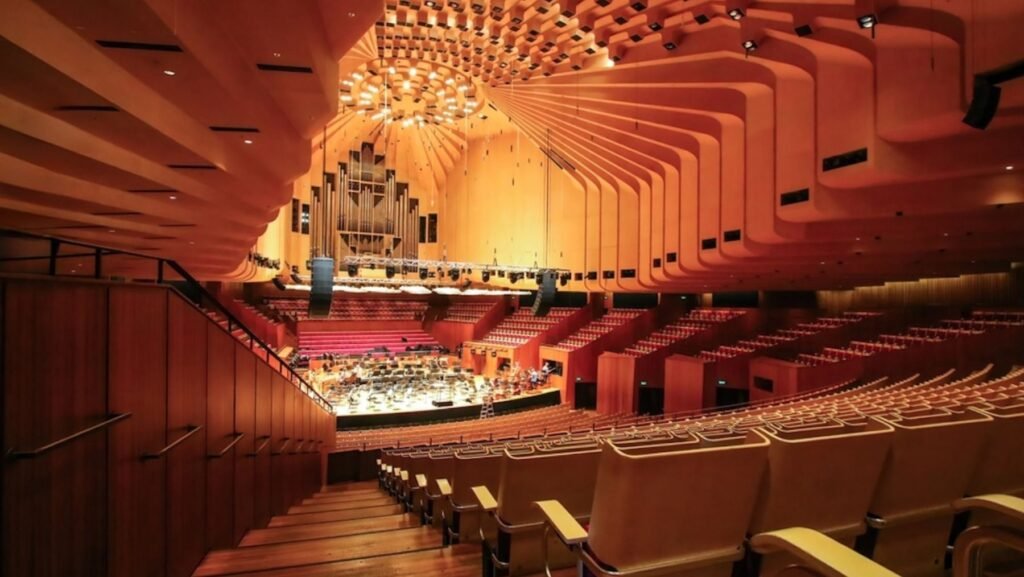
The interiors are often less discussed than the exterior, but they are equally important. Inside, the building contains performance halls, foyers, circulation zones, backstage areas, gathering spaces, and cultural interiors that support different kinds of events.
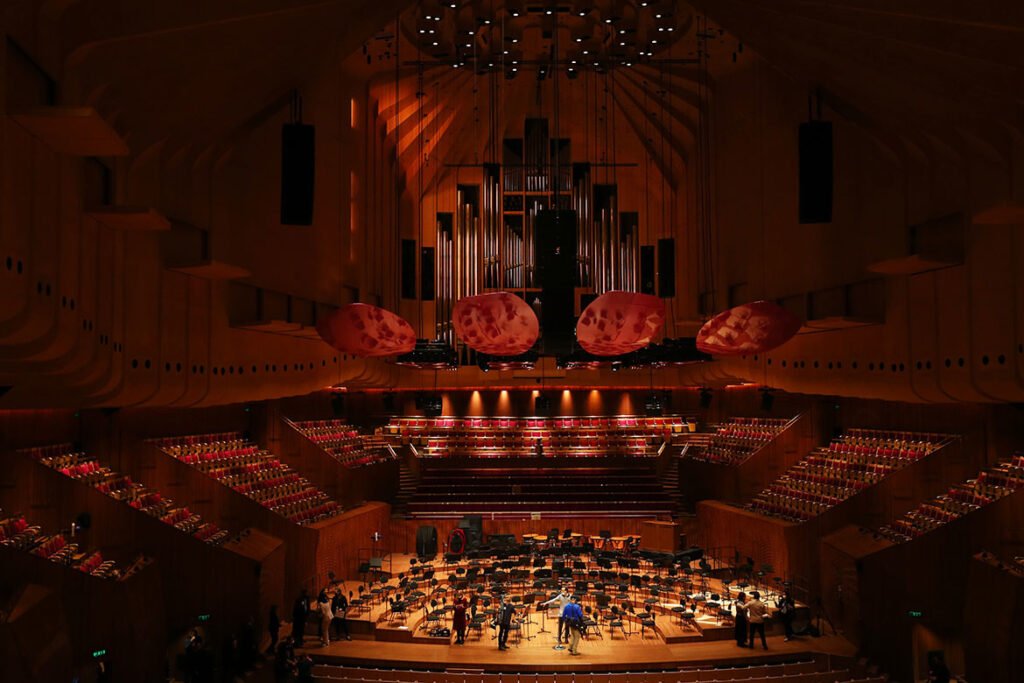
Interior designers can learn from the way material, movement, and atmosphere are handled. Timber surfaces, warm tones, controlled lighting, acoustic treatments, and carefully planned circulation help create a sense of performance and anticipation.
A cultural building must manage both practical and emotional needs. It must move large numbers of people efficiently while still making them feel that they are entering a special place. This balance between function and ceremony is one of the strongest interior lessons of the project.
Materials, Details and Craftsmanship
The opera building is admired not only for its overall form but also for its material choices. The roof shells are covered with ceramic tiles that create a subtle pattern and texture. The podium gives the building a strong base, while glass walls open the interiors toward the harbour.
This combination of tile, concrete, glass, and timber gives the landmark its distinct personality. The materials are not random. Each one supports the building’s visual and spatial character.
For architects and interior designers, the lesson is clear: materials must serve both performance and emotion. A surface should not only look beautiful; it should respond to light, durability, scale, and experience.
What Architects Can Learn from Opera Design?
Architects can learn several lessons from this landmark. First, a powerful concept can define a building for generations. Utzon’s shell idea was strong enough to become a national symbol.
Second, site response matters. The building works because it belongs to the harbour. It uses its location, views, and surrounding water to strengthen its identity.
Third, collaboration is essential. A project of this complexity needed architects, engineers, builders, craftspeople, and public institutions to solve problems together.
Fourth, architecture can be controversial during its making but celebrated over time. Some buildings are too advanced for their moment, yet later become timeless.
What Interior Designers Can Learn from Opera Spaces?
Interior designers can study this opera building for its sense of arrival, scale, atmosphere, and material warmth. The visitor journey is not only about reaching a seat. It is about moving through foyers, stairs, views, thresholds, and performance spaces.
The interiors show how public buildings can create anticipation. Lighting, ceiling height, wall texture, acoustics, seating, and circulation all influence how people feel before a performance begins.
For hospitality, cultural, and commercial interiors, this is a useful lesson. A memorable space is not only about decoration. It is about the complete journey from entry to experience.
Cultural Value and Global Recognition
The opera building was formally inaugurated in 1973 and later became a UNESCO World Heritage Site in 2007. Its global recognition comes from both its architectural form and its lasting cultural impact.
It is not only a tourist attraction. It is a working performing arts centre, a public gathering place, a civic symbol, and a design landmark. Its value lies in the fact that it continues to function while also inspiring architects, artists, travellers, and students.
This combination of use and symbolism is rare. Many landmarks are admired from the outside, but this one continues to live through performances, public events, tours, and cultural memory.
Why Does This Landmark Still Feels Relevant Today?
The Sydney Opera House remains relevant because it speaks to many design concerns that matter today. It responds to site, creates public value, uses a memorable form, supports cultural life, and shows how engineering can turn imagination into reality.
It also reminds designers that architecture should not be reduced to trends. Great buildings can remain meaningful for decades when they are rooted in a strong idea and a strong relationship with place.
In a world of fast-changing skylines, this landmark proves that timeless architecture does not need to be the tallest or largest. It needs to be meaningful, memorable, and deeply connected to people.
Final Thoughts on Opera and Timeless Design
The Sydney Opera House is one of the finest examples of architecture becoming a cultural identity. Its shells, harbour setting, interiors, public terraces, and performance spaces make it a complete design experience.
For architects, it offers lessons in concept, structure, site response, engineering, and courage. For interior designers, it teaches atmosphere, material control, circulation, and emotional experience.
In the end, this landmark proves that architecture can do more than house activity. It can inspire a city, define a nation’s image, and remind the world that great design begins with imagination and grows through discipline.